


What Is Foot Conditioning?

It is a method that combines scientifically grounded care with exercise to foster “physical independence”—the ability to continue moving comfortably on your own two feet throughout your life. Drawing on insights from exercise physiology, it supports the development of lifelong whole-body fitness that goes beyond temporary symptomatic relief.

Start

Why Start “From the Feet Up”?

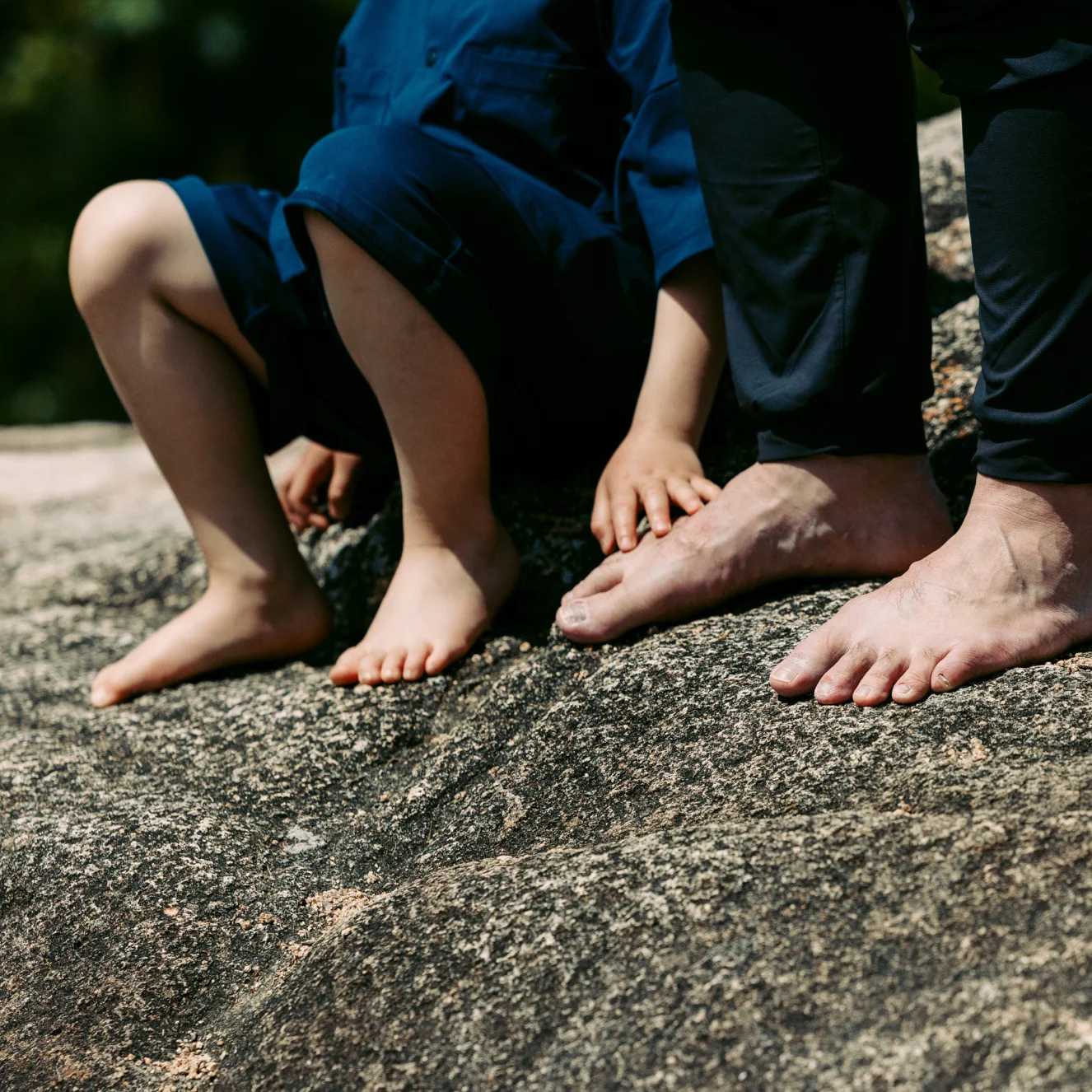
The feet, which support the entire body despite accounting for just 2% of its surface area, are not merely tools for movement but “precision devices” that govern our health. At STRIDE, we define the role of the feet from the following three perspectives:

1. The Foundation of the Body’s Structure

Walking, running, climbing—in every upright movement, the feet are the sole point of contact with the ground. Even slight misalignment or a collapse of the arch in the feet can cascade through the body (kinetic chain), affecting the knees, lower back, and shoulders, and throwing the entire body’s alignment off balance.Many cases of chronic fatigue, joint pain, and injuries stem from the body’s compensatory movements in response to this “collapse of the foundation.” Correcting the condition of the feet directly addresses structural issues throughout the body at their root.

2. Sensors That Detect Environmental Information

The soles of the feet are highly precise “sensory organs” that detect the slope and firmness of the ground, as well as the body’s center of gravity. The information gathered at the moment of foot contact is sent to the brain, which unconsciously controls posture and movement. However, modern shoes with excessive cushioning and flat surfaces have put these sensors into a “dormant state.”Based on biomechanical research, STRIDE visualizes load characteristics to reactivate these dulled senses, guiding the wearer to a state where both the brain and body can fully comprehend “correct movement.”

3. A Functional Engine

The feet are equipped with advanced functions that absorb the impact of landing and convert it into propulsive force for the next step. When these functions work in coordination, movement becomes balanced, enabling high performance.

The key to building a healthy body lies in optimizing this “engine output” without placing undue strain on the body. This applies equally to athletes seeking to improve their performance and to those simply hoping for a pain-free, comfortable daily life. Aligning the body starting from the feet is the key to supporting “steps that last a lifetime.”

Goal

The change we aim for: From the feet to the whole body, in abundance.

The ultimate goal of Foot Conditioning is to achieve “physical independence”—the ability to move comfortably on your own two feet for a lifetime. We rebuild the body’s natural functions—which are often lost due to modern lifestyles and excessive support—starting from the feet.

This method emphasizes a “subtractive process” in which we gradually let go of external interference, such as excessive cushioning and corrective devices. As the feet make proper contact with the ground and regain their function as highly precise sensory organs, the dormant spring-like action of the arches and the strength of the toes are reawakened.Stability in the feet corrects the body’s overall alignment and leads to natural movement free of unnecessary tension. This creates a virtuous cycle in which everyday movements—such as walking, running, and climbing—themselves become enjoyable forms of exercise, helping the body evolve into one that resists fatigue and is free from the fear of injury.

The ultimate goal goes beyond the temporary relief of pain; it is to acquire the ability to understand and manage your own physical condition. Regaining trust in your body awakens a positive drive to “go further” and “explore new places,” expanding opportunities for new challenges and encounters in life.May “movement itself become a joy in life.” Foot conditioning serves as the foundation for sustainable health, enabling you to go wherever you wish of your own accord, no matter your age, and to continue taking steps that are uniquely your own.

Method

STRIDE’s Foot Conditioning Method

STRIDE provides a system that allows anyone to naturally master
foot conditioning by cycling through the following three elements.

1

Measure

MEASURE

2

Use

ITEMS

3

Acquire

TRAINING

1. Measure (MEASURE)

Measure, understand, and be convinced. By visualizing the condition of your feet and body, anyone can find the stride that’s right for them. Rather than relying solely on feel, we’ll use objective data as a guide to work together to determine the direction for your future progress.

ex.
  • Foot Condition: Leg length, foot width, arch type, left-right differences, use of toes
  • Posture and Movement: One-legged stance, squats, simple form checks for walking and running
  • Visualizing Weight Distribution: Check “where your weight is distributed” through foot pressure measurement (standing/walking/running)
  • Range of Motion & Flexibility: Checking stiffness in the ankles (dorsiflexion) and around the calves
  • Daily Consultation: Work, amount of movement, situations where pain or discomfort occurs, goals (travel, commuting, marathon, hiking)

2. Use (ITEMS)

Easy to choose, easy to stick with. From shoes and care products to food. We offer a range of “conditioning options” tailored to your goals and body, transforming how you take care of yourself every day. Of course, we “sell quality products,” but we also create a state where “staying in shape becomes a habit.” That’s what STRIDE’s ITEMS are all about.

Examples:
  • Shoes: Recommendations based on purpose (WALK / RUN / HIKE), fit, stability, and fatigue resistance
  • Self-Care: Foot care products, recovery aids, taping, etc.
  • Nutrition (Food): Options to fill daily nutritional gaps, fuel your workouts, and support recovery
  • Sustainability Support: User guides, replacement guidelines, and maintenance consultation services

3. Mastering (TRAINING)

Master the “quality of each step” on your own. Learn proper movement techniques and acquire the “skills to self-correct” in your daily life. Rather than struggling alone, you’ll transform exercise into a comfortable habit while having fun at the gym and within the community.

ex.
  • Basics of Alignment: Ankle and calf flexibility, foot-to-lower-leg strength, balance (progressive)
  • “Basic Foot Strength”: Incorporate toe and sole exercises (such as short-toe exercises) in a way that’s comfortable and sustainable
  • Re-learning Movement: Adjusting walking, running, and climbing techniques to suit your body
  • Providing a Space: Gym / Classes / Group Workouts (Beginners Welcome)
  • Community: You’ll stick with it because you’re doing it together. Designing habits (once a week, once a month, participating in events, etc.)

Frequently Asked Questions

It’s a method that starts with your feet to bring your “whole body” into balance. You’ll use “ measurements” to objectively understand your current condition, then combine “tools” to optimize your daily environment with “exercises” to enhance your physical function. The goal isn’t just to “push yourself,” but to create a “sustainable routine” where your daily movements naturally fall into place.

Because relying solely on intuition can lead to inconsistencies in everything from choosing shoes to exercising. By conducting foot-focused measurements, we visualize your body’s characteristics, allowing you to truly understand “where your weaknesses lie” and “what you need to change.” Grounded in scientific evidence, this approach enables you to choose your “next step” with confidence.

The foot conditioning provided by STRIDE is not a diagnosis or treatment; rather, it is an approach designed to support your daily “care and exercise routine.” If you experience severe pain, numbness, sudden swelling, or difficulty walking, please prioritize seeking medical attention first.We support the prevention of minor ailments before they require medical attention, the rebuilding of a “functional body” after treatment, and the maintenance of lifelong health.

Yes.It serves as an investment in improving your performance and mitigating the future “risk of losing mobility.” Even if you have no noticeable symptoms, it’s not uncommon for the sensors in the soles of your feet to be dormant or for strain to be concentrated in specific areas. Regaining “functional feet” now lays a strong foundation for improving your athletic performance and continuing to walk with ease 10 or 20 years from now.

It’s because the body is all interconnected (kinetic chain). It’s the same as when the foundation of a building tilts—the upper floors become distorted. In many cases, knee and lower back pain actually results from the body compensating for misalignment in the feet, which serve as the foundation. Correcting the condition of your feet can be the “shortest route” to resolving structural issues throughout the entire body at their root.

Shoes are extremely important, but they’re only “half” the story. No matter how good the “device” (shoes) is, it won’t perform to its full potential if the “operating system” (how you move your body) is weak. You need to support your feet with the right gear while using exercises to restore their natural functions—such as springiness and sensory awareness. Only when these two elements work together can you achieve real, fundamental change.

We subtract “excessive protection” from the feet to encourage self-reliance. Many modern shoes, in their excessive effort to protect against impact, cause the muscles and sensory perception in the soles of the feet to atrophy.We prioritize a process of gradually letting go of external support (such as excessive cushioning or stabilization) while removing physical limitations. Ultimately, we aim to reach a state where you can trust “your own feet—the best tools you have.”

While managing pain and discomfort, you’ll learn to “recognize” uneven pressure distribution on your own. By combining the selection of appropriate footwear, the use of toe separators, and toe exercises, we aim to slow the progression of the condition and alleviate pain.In recent years, research has accumulated on the combined use of exercise and assistive devices as a conservative treatment (non-surgical method), and we propose the optimal approach based on these findings.

“Physical noise” is reduced, making it easier to maintain concentration. When foot fatigue and the stress of standing work are alleviated, you’ll be able to direct your brain’s resources toward your work. Furthermore, it is known that improved gait quality and increased physical activity contribute to better mental health and cognitive function, making this approach highly effective for business professionals’ lifestyle management.

You’ll be “convinced” right away, but it takes time for the changes to “take root.” The first time you experience it, the measurements will help you “truly understand” your own challenges. From there, it’s ideal to continue for several months until fundamental changes—such as shifts in how you feel fatigue and the establishment of an exercise routine—accumulate.STRIDE prioritizes sustainable changes—changes that become a lifelong asset the more you continue—over short-term, immediate results.