



[Column] Also Known as the “Cramped Bag” (Kyukutsu Bukuro): The Japanese and Leather Shoes from a Cultural-Historical Perspective
2026.06.24
The Relatively Recent History of the Relationship Between the Japanese and Shoes
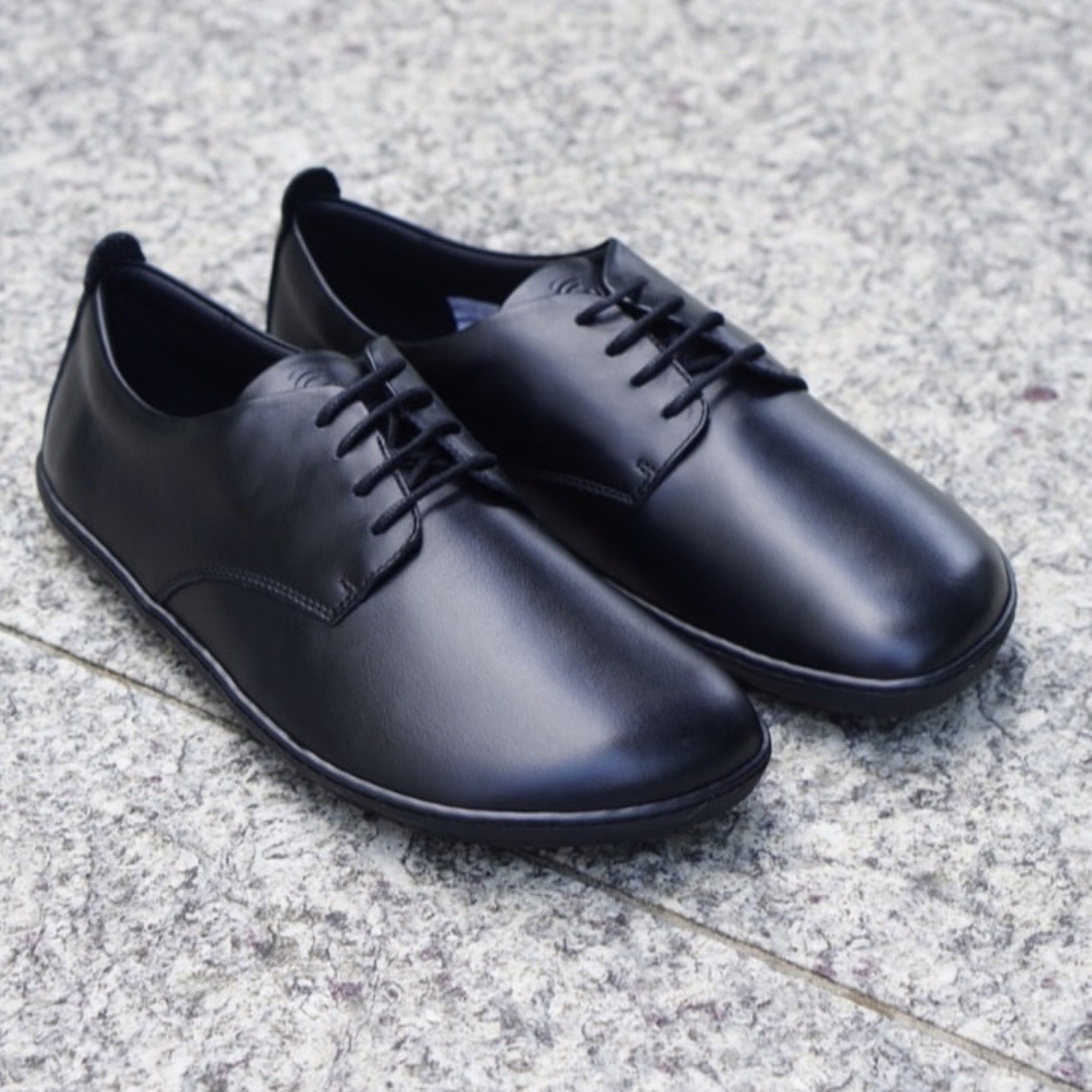
At each STRIDE LAB location, we carry barefoot shoes from brands such as Groundies and Blusun from Germany, and Skinners from the Czech Republic—styles that are versatile enough to suit both formal and casual occasions.
Although they differ in style from road and trail running shoes like Altra and Notace, they share the same concepts of zero drop and foot-shaped design. Designed to blend seamlessly into your weekend outings and daily commute, these shoes embody our desire for you to choose footwear that prioritizes foot health even for everyday wear.
By the way, when did Japanese people actually start wearing leather shoes in the first place?
The prevailing theory is that they were first introduced during the late Edo period through the Meiji era, but didn’t become widespread until after World War II.While European leather shoe culture is said to date back to the Middle Ages, the three shoe manufacturers mentioned earlier were all founded in Europe, and even the oldest among them was established in 2014—so their history is still relatively short. In other words, it is only very recently that the traditional forms of casual and formal shoes have been reevaluated and a focus on foot health has begun to emerge.
The History of Leather Shoes in Japan
As I jostle through the morning rush hour commute and glance down at the feet of the passengers around me, my eyes are drawn to the shoes worn by men in suits or smart casual attire. Those leather shoes with their tapered toes and high heels—such a sleek design. While countless Japanese people now wear these leather shoes as a matter of course, a question suddenly pops into my mind:When did the Japanese first encounter “leather shoes”?
Since Japan was largely isolated during most of the Edo period, it seems reasonable to assume that Western-style shoes didn’t begin to enter the country in significant numbers until the Meiji era or later.
There are two books written about the Japanese people’s encounter with and relationship to “shoes”: *The Beginnings of Western Shoes: The Japanese Encounter with Shoes* (Minoru Inagawa, Gendai Shokan) and *A Cultural History of Shoemaking: Japanese Shoes and Artisans* (Minoru Inagawa and Yoshimi Yamamoto, Gendai Shokan).The author, Mr. Inagawa (who passed away in March 2024), researched the history of shoes while also running his own shoe business; during his lifetime, he served as deputy director of the Leather Industry Museum.
According to *A Cultural History of Shoemaking*, Western-style shoes began to be worn by a very small segment of the Japanese population around the end of the Edo period and were gradually adopted for military uniforms and other purposes. Prior to that, however, the general Japanese populace typically went barefoot or wore geta, zori, or setta as footwear.While there may be various theories, it is said that leather shoes became mainstream around the Shōwa 30s, following World War II. Only about 70 years have passed since then.
A Japanese person who genuinely believed that “Westerners don’t have heels”
The following passage appears at the beginning of *An Introduction to Western Shoes*.
“……I’ve heard this story: ‘People in the Edo period, upon seeing the heeled shoes worn by foreigners, genuinely believed that the reason they couldn’t wear open-toed geta or zori like they did was because those foreigners didn’t have heels on their feet.’……”
“Why on earth do they wear shoes with such high heels? Could it be that they don’t have heels of their own, so they’re using shoes to raise their height—?”
While this anecdote conveys the mix of astonishment and strong preconceptions held by people from the late Edo period to the early Meiji era upon encountering Westerners and the new phenomenon of leather shoes,expressions like “whether shoes have heels” and “open-toed geta and zori” seem to foreshadow the modern landscape, where orthodox shoes coexist with barefoot shoes as a new alternative.
From the Perspective of “Body Modification Engineering”
Yoshimi Yamamoto, the other author of *A Cultural History of Shoe Making*, is a researcher in the field of “body modification,” which studies ancient customs involving the alteration of the human body, such as tattooing and neck elongation.
The very existence of research into the physical modification of the human body is fascinating in itself, but the fact that a scholar in this field is interested in the history of shoes speaks to the significant impact that wearing shoes has had on the human body.
At the beginning of this book, Ms. Yamamoto states:
“From the perspective of body modification studies, it seems we are unable to love our feet in their natural state. Shoes serve as tools of modern body modification and are a contributing factor to various conditions such as bunions, hammertoes, ingrown toenails, and hammer toes.Why do we continue to wear shoes that don’t fit our feet, even though we know they can cause deformities?
This question connects to why practices like foot-binding—which artificially creates small feet—and the Cinderella story, with its glass slipper, have continued to fascinate people since ancient times.”
Also known as the “Cramped Bag” (kyūkutsu bukuro)
Behind the questions of why people wear shoes and how they wear them lie intertwined cultural and social factors related to the human foot. While I’ll leave the details to this book, what really catches the eye is the question: “Why do we continue to wear shoes that don’t fit our feet?”
As I read on, I learned that when leather shoes first arrived in Japan at the start of the Meiji era and were adopted by the military and other organizations, blisters were reportedly the biggest problem. During one military exercise, half the soldiers in a regiment reportedly requested to wear “zori” sandals because of blisters.
Until then, people had lived barefoot or in open-toed footwear, but suddenly they were forced to wear tight, heeled leather shoes. It’s no wonder their feet were screaming in pain. At the time, shoes were apparently even referred to, quite literally, as “tight bags” or “kiu shoes.”The second nickname is nothing more than a pun, but it shows just how much people at the time viewed shoes as “something they didn’t want to wear.”
Western-Style Shoes That Became Embedded in Japanese Culture
Regardless of age or gender, the fact that Japanese people have continued to wear leather shoes that don’t fit their feet is likely due in large part to cultural factors such as the irresistible tide of Westernization, collective discipline, and fashion trends that have evolved and matured over time.
Furthermore, even though the basic shape of leather shoes may not appear to have changed significantly to this day, it goes without saying that advances in technology and materials aimed at improving comfort have simply made them much easier to wear.
In today’s world, hardly anyone wears zori or geta anymore. Setting aside any stuffy notions of “returning to our roots,” exploring the cultural history of people and shoes through historical records promises to offer some fascinating insights.
That said, while the culture of (leather) shoes originated in the West, the new styles that seem to mark a slight “return to the roots” also came from the West. Next, I’d like to delve deeper into these topics.
Reference)
Minoru Inagawa. The Beginnings of Western Shoes: The Encounter Between the Japanese and Shoes. Gendai Shokan, 2013, 222 pp.
Minoru Inagawa, Yoshimi Yamamoto. A Cultural History of Shoemaking: Japanese Shoes and Artisans. Gendai Shokan, 2011, 245 pp.