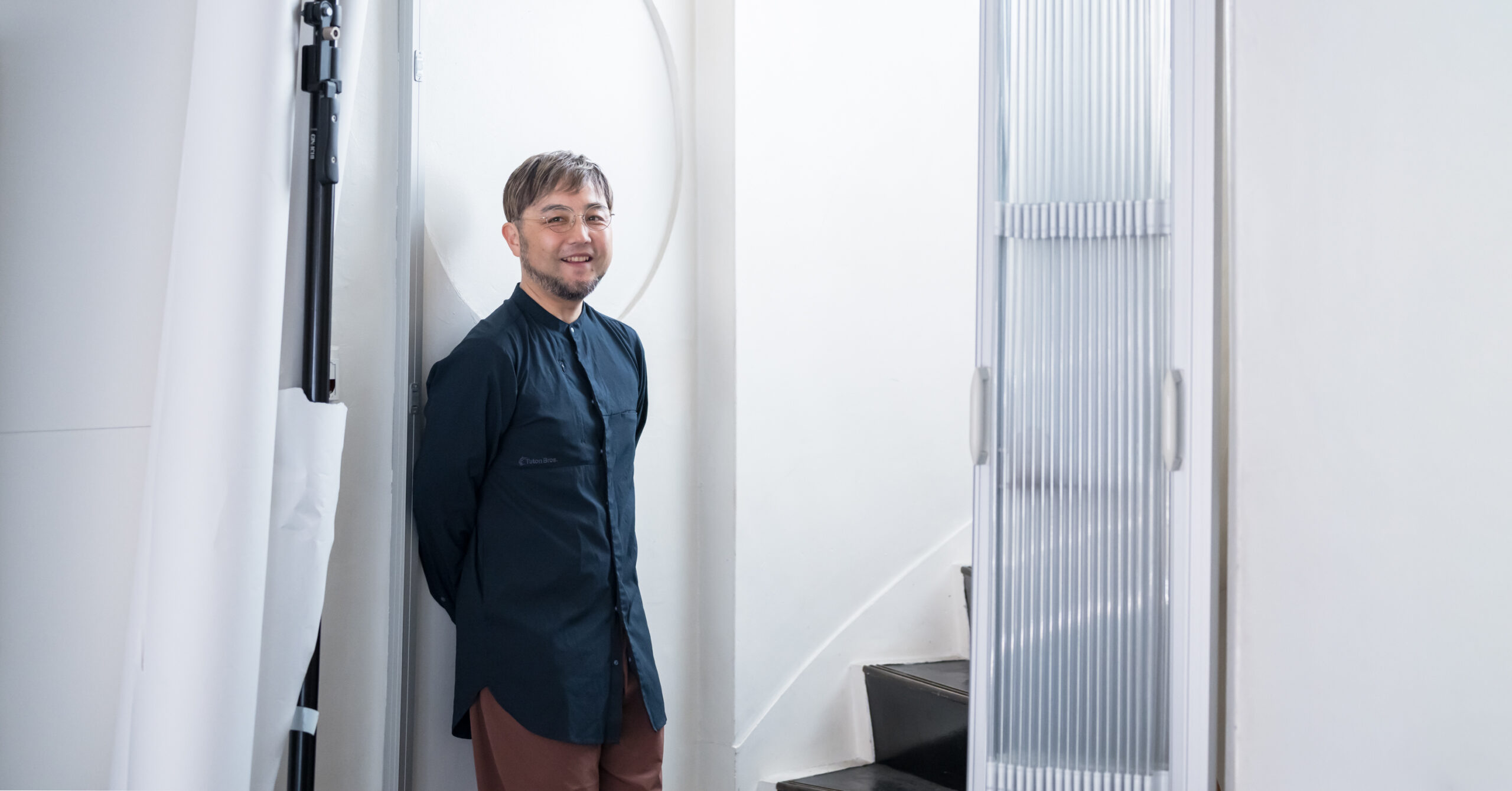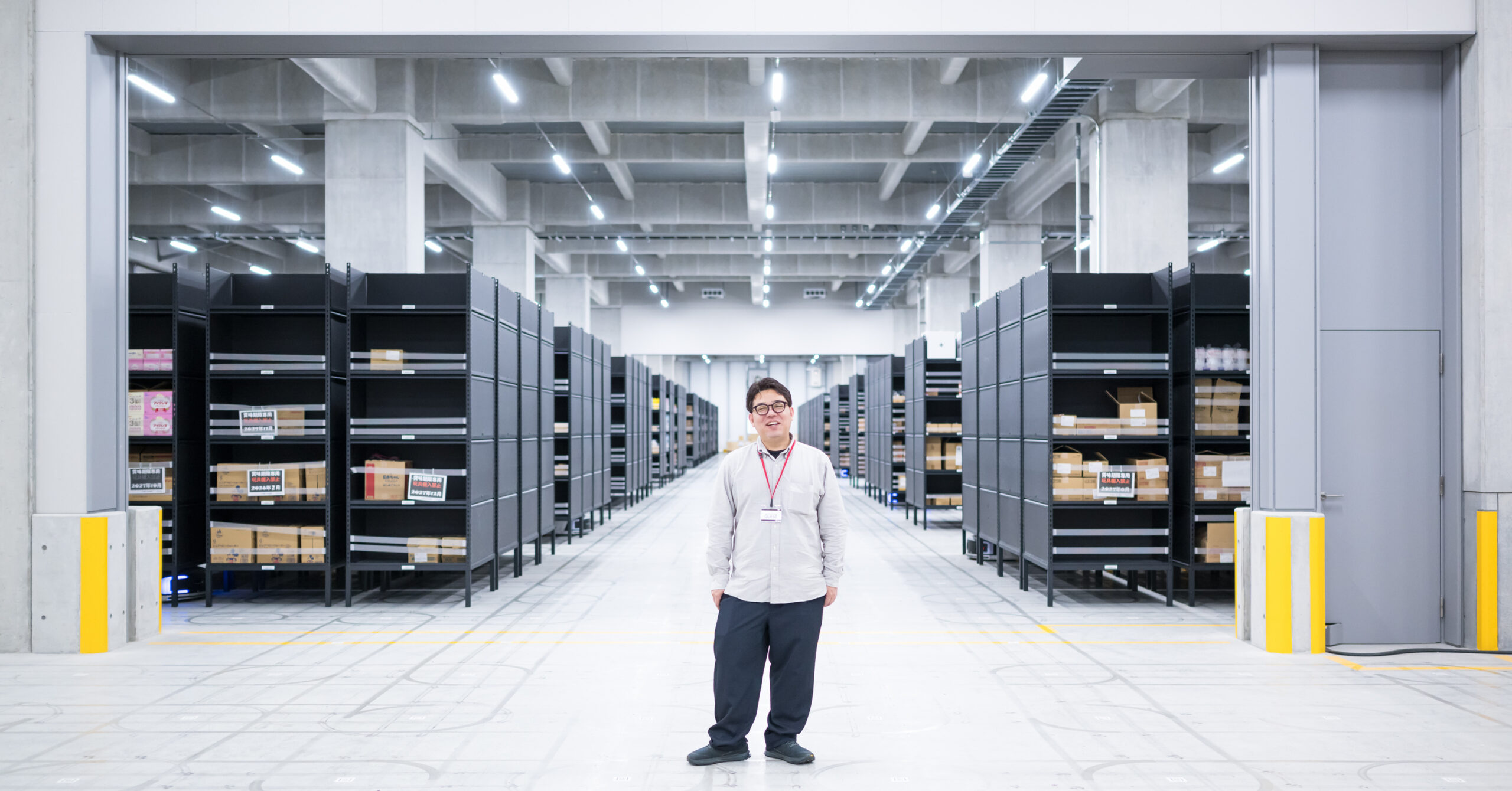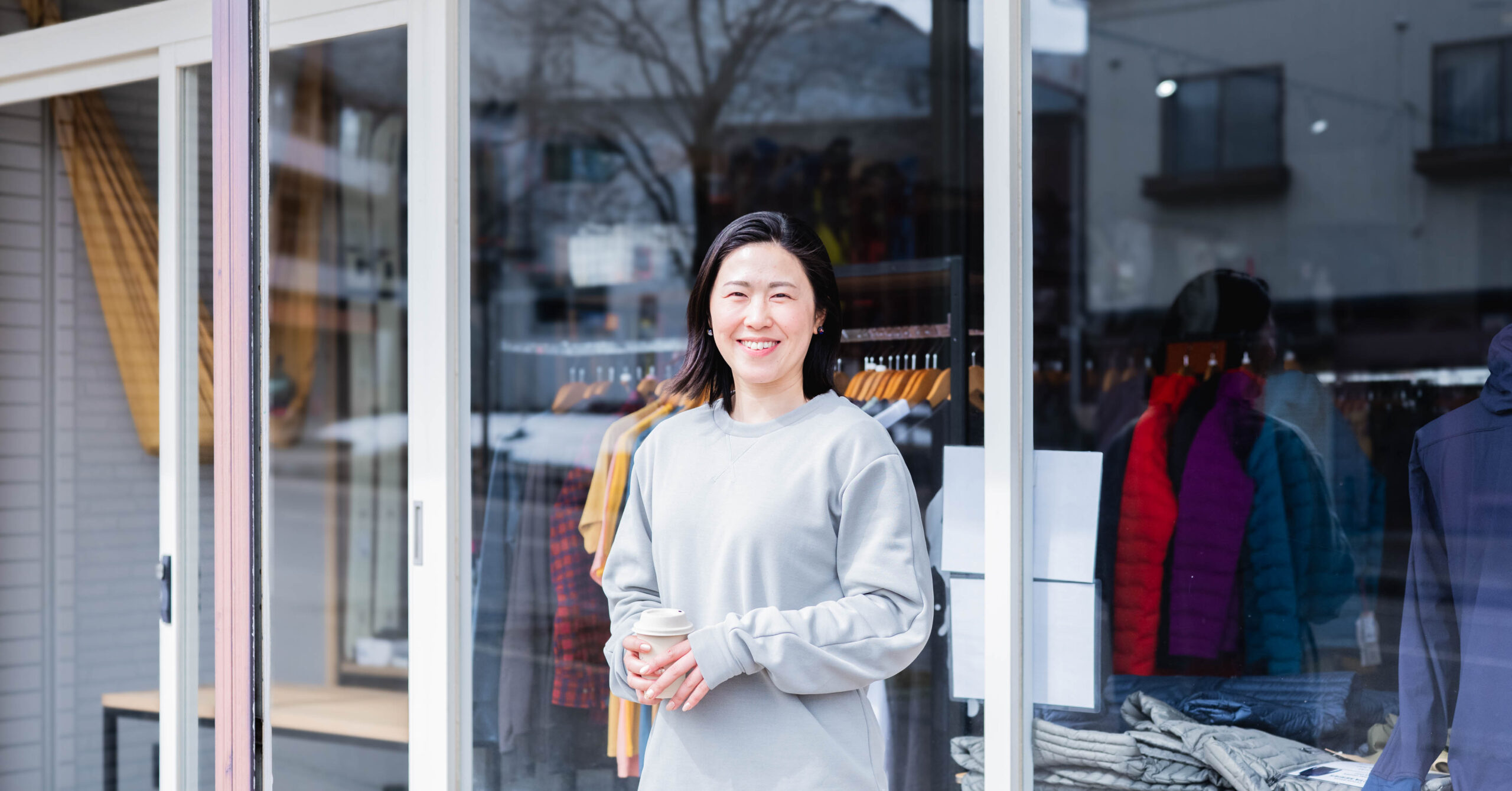



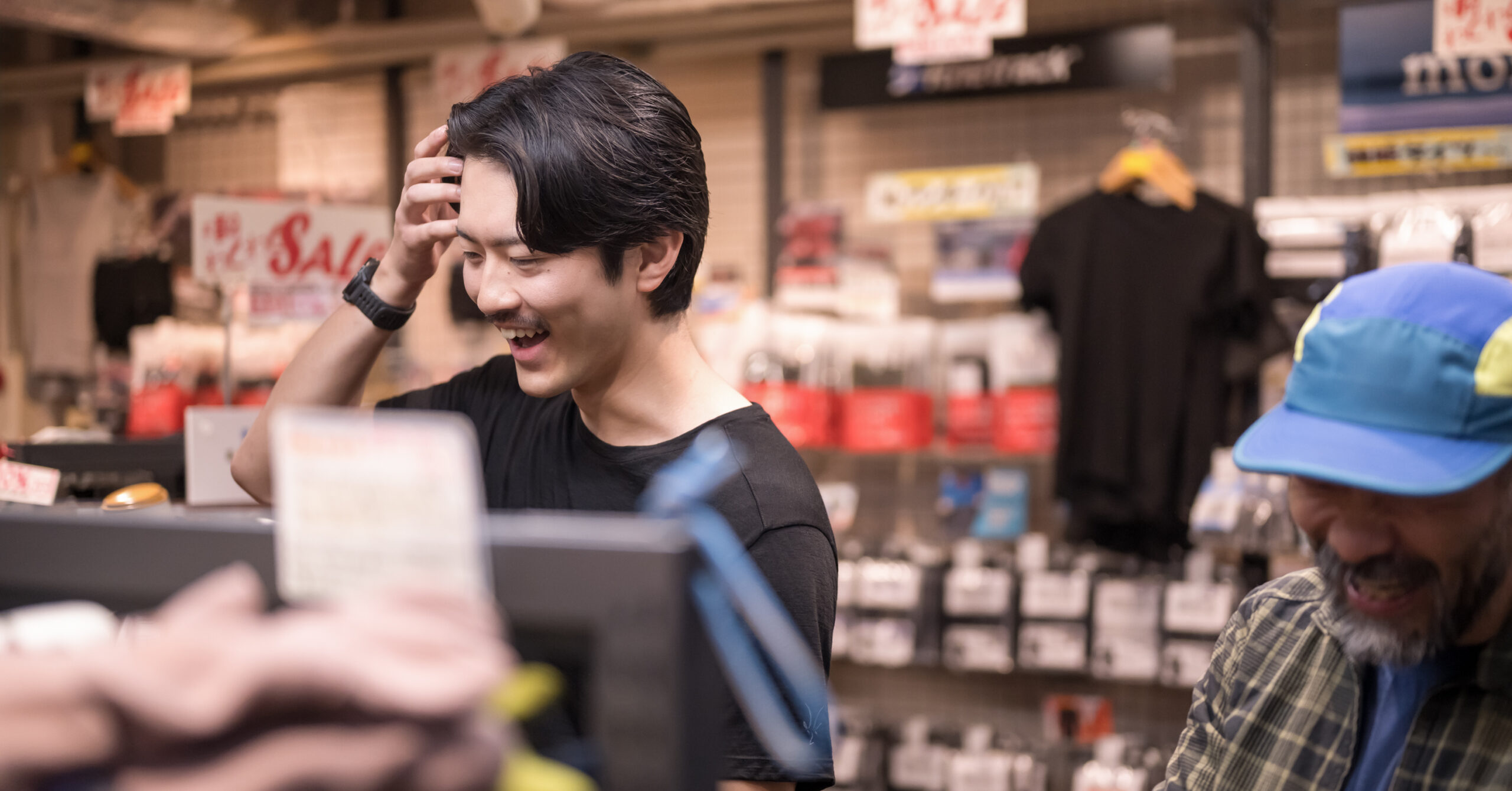
Generally speaking, the main job of a sales representative is to propose the products and services their company handles to clients and other partners, acting as a bridge to expand the market. While this is a crucial role that supports a company’s revenue in any industry, how does it actually work in practice? We spent a day shadowing Zentarō Maeno, a sales representative at STRIDE, a company that manages numerous brands.
Text by Toshiaki Ito
Photos by Shinichi Yajima
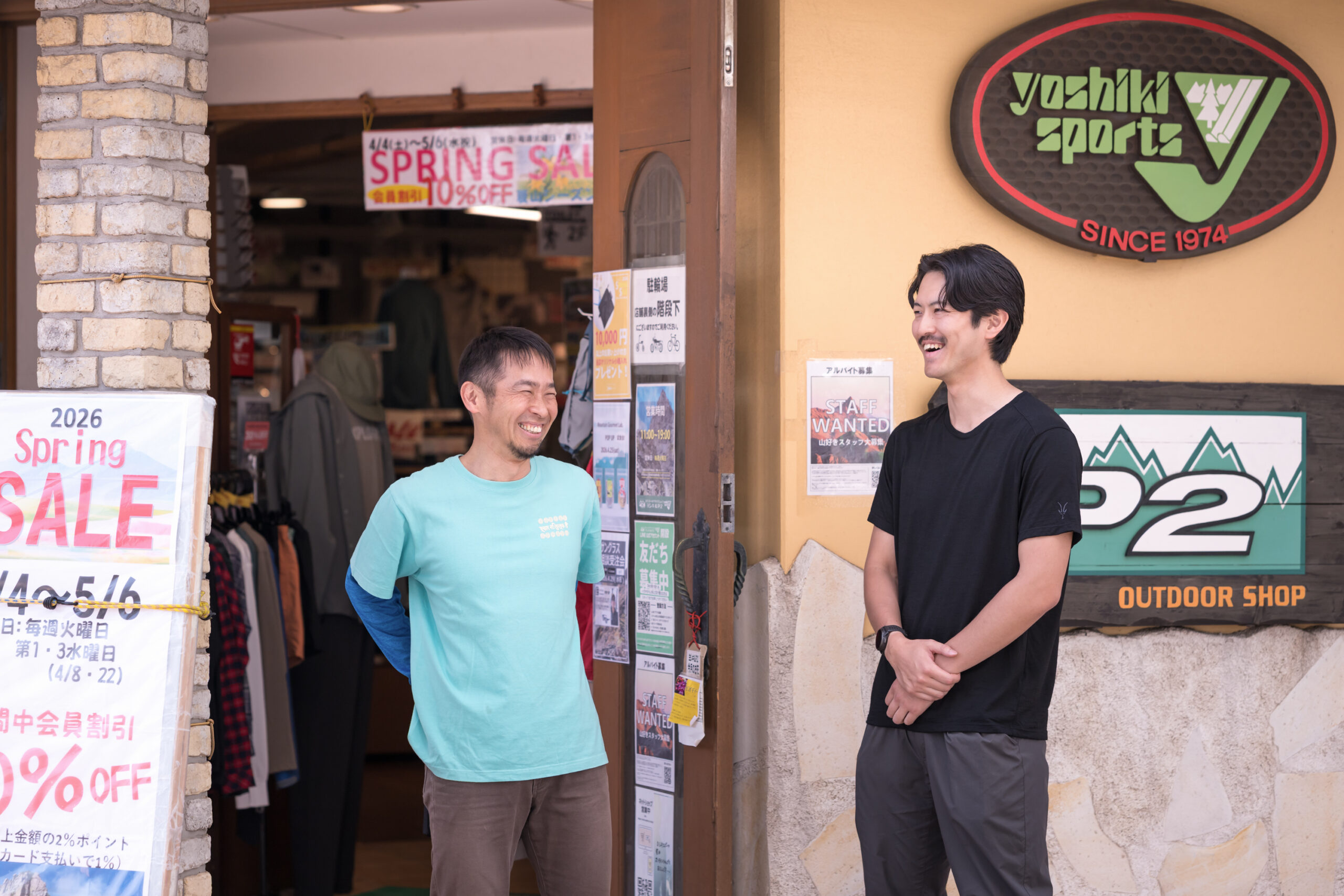
Growing the Brand Together with Our Stores
Maeno joined Stride about half a year ago. In his previous job, he worked in sales for a wholesaler—what’s commonly known as a distributor. A distributor is an intermediary that purchases products from manufacturers and sells them to retailers. The company Maeno worked for handled products from many well-known outdoor brands and did business with retailers nationwide.Although he hasn’t been at Stride for very long, his experience surveying the industry from a broad perspective is a major strength.
“Since the company I worked for handled not only mountaineering gear but also camping supplies, I was able to grasp—albeit in broad terms—how products move throughout the outdoor industry as a whole. It was really interesting to be able to view the industry from that kind of bird’s-eye perspective,”
While there are major trends, “what’s selling right now” varies from store to store. The day-to-day work of a sales representative is a repetition of steady (or, as Maeno puts it, “down-to-earth”) tasks. Making phone calls, sending emails, and visiting stores to build relationships.By doing so, I deepened my understanding of each store’s preferences and areas of expertise, as well as the characteristics of the local area and its customer base, allowing me to propose suitable products.
“Since we were a wholesaler, we handled a wide variety of brands and products. Take backpacks, for example: there were products from Company A that prioritized functionality, and others from Company B that were more affordable.Selecting items from among so many options that seemed like a good fit for each specific store and its customers—and making those proposals—was challenging, but it was also fun.”
The key to sales lies in communication. If you walk into a store for the first time and immediately say, “I recommend this new product,” no one will take you seriously. First, you have to build a relationship of trust through repeated conversations.Sometimes, you can find a lead right in the midst of casual small talk.
Finding the right product for the other party was rewarding, and it gave me a real sense of accomplishment when it was a perfect match. However, as I gained more experience, I found myself wanting to take it a step further.

The company also carried some brands that it imported directly. They produced high-quality goods but had low brand recognition; while I sensed their potential, the time and effort available to nurture these brands were limited. Our main business as a wholesaler was, after all, merely acting as a middleman in the supply chain, and my job was to “stare at the numbers.”We simply couldn’t spare the resources to take it a step further—to grow the brands or get more people to pick up their products.
“I became interested in the kind of work manufacturers do: partnering closely with stores to establish a brand’s foothold. Rather than just proposing what’s selling or what customers want, I wanted to work with the front-line staff to nurture brands that I personally believed in.I came to want to do work that increases sales over a long span—say, three or five years—while keeping the store’s core identity intact.”
I’d heard that Stride was a company that embraced challenges. During the interview, I poured out my heart.I explained that I wanted to propose not just the quality of the products to our business partners, but also the core elements of the brand’s philosophy—and to work with specialty stores that understand this as regional hubs to grow the brand together. I felt a sense of crisis about the brand’s direction shifting if it started selling in unintended ways.
It’s been half a year since I joined the company. There’s no gap between my preconceived image and the actual work.
“There’s a real sense of speed here. Even in situations where I need to get approval from my supervisor, decision-making is incredibly fast. Of course, there are areas where individual sales representatives are given full autonomy. After all, you can’t become independent if you’re constantly asking upper management for everything. I make sure to think things through on my own, communicate smoothly with other departments, and share success stories within the company.”
When a deal goes well, I bring that experience back and share the entire process with other sales representatives. Rather than keeping the results to myself, I’ve come to realize that strengthening our foundation leads to growth for the entire team.
“I’ve heard that ALTRA also started out by loading samples into a HiAce and traveling all over the country. I think it’s important to strike a balance between handling sales in a smart, efficient way and getting your hands dirty when necessary.”
He’s a serious guy.
There's value in buying things at a store
This spring, we’re focusing on the American wool brand “Ibex.” Among brands that specialize in wool apparel, Ibex stands out for its wide variety of fabrics.It offers as many as 12 to 13 varieties, ranging from lightweight options for spring and summer to thick, warm fabrics, and carries eight of these varieties in Japan. With multiple spinning methods used to create the wool yarn, the brand’s appeal lies in its wide-ranging lineup tailored to different seasons and uses.
One weekend in early April, when the spring and summer products arrived, we held a pop-up event at “Yoshiki & P2,” a popular pro shop in Chiba Prefecture.
When I entered the store shortly before opening time, the staff had already set up a dedicated display area. Timed to coincide with the store’s quarterly sales, Yoshio Yoshino, president of Yoshiki Sports, has high hopes for the event.
“Lately, customers pay more attention to ‘We’re having an event’ than to ‘XX is on sale.’ While wool has a strong association with fall and winter, we hope that by letting customers see our products at this time of year, we can raise awareness and build momentum for the fall and winter seasons. Pop-up events are only possible with the cooperation of brands and importers—it wouldn’t happen without a supportive point of contact.I’m glad Mr. Maeno was the person in charge (laughs).”
Maeno’s relationship with Yoshiki Sports dates back to his previous job. He has many other clients like this, and the trust he’s built with them over the years has become a valuable advantage. Maeno himself says, “I learned so much there, and I’m truly grateful to my former company.”
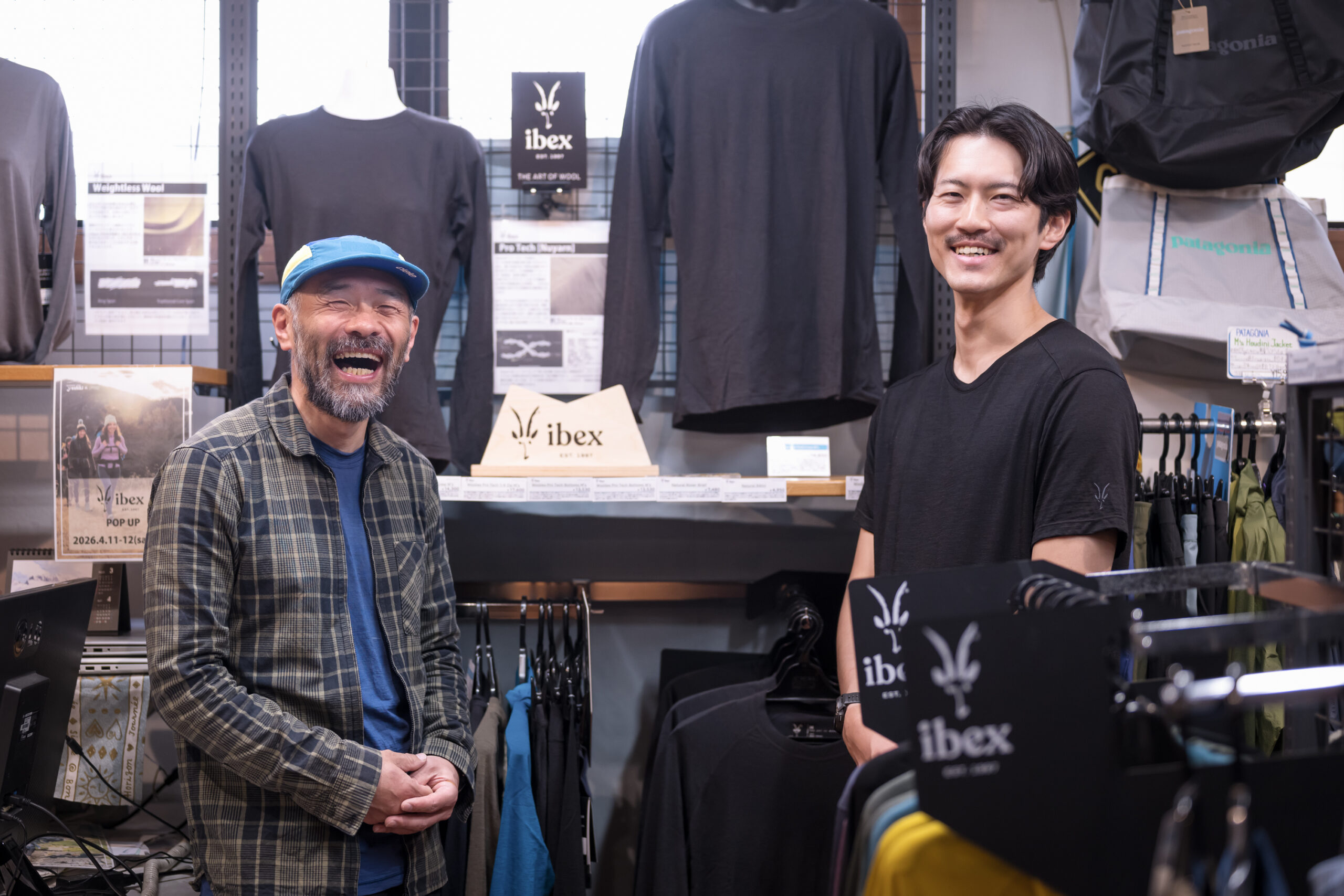
The pop-up event was a success.
The advance promotion by Yoshiki & P2 also paid off, attracting customers who came specifically for Ibex. One long-time Ibex fan gave the brand high praise, saying, “The stitching is meticulous, and I love how comfortable the clothes stay over time.”Although they had said they were “just browsing,” they got so caught up in a lively discussion about Ibex with Maeno that they ended up buying a T-shirt.
One woman wandered into the store looking for a lightweight hoodie; after trying on a few, she purchased the “Springbok Sun Hoodie.” The soft feel of the wool was the deciding factor. She said she hadn’t known about Ibex before, but it was gratifying that she chose the product based on how it felt rather than the brand name. We also received orders for colors and sizes we didn’t have in stock.


“While we can sell products online, I believe items sold in-store have greater value. In that sense, this pop-up served as a great stepping stone.”
Following the event, we finalized business negotiations and secured an agreement to carry our products as regular stock. We plan to expand this pop-up concept to other regions in the future.
“Each store has its own style, and the characteristics vary significantly by region, so I’m looking forward to visiting other stores.”
Now that online shopping has become the norm, shopping at physical stores has taken on a different kind of value than before. It’s not just about fulfilling a need—it’s about the joy of searching for something you truly “want” and the satisfaction of finding it. Maeno reminded us once again that there’s a joy to be found in shopping that goes beyond mere convenience.

Profile
Zentaro Maeno
Born in Kanagawa Prefecture. He became passionate about boxing in middle school and became hooked on mountain climbing, which he took up as part of his training. He majored in political science in college, but, aspiring to a career in sports, he entered the outdoor industry. His favorite mountain ranges are the Yatsugatake and the Northern Alps. Running after returning home has become part of his daily routine.