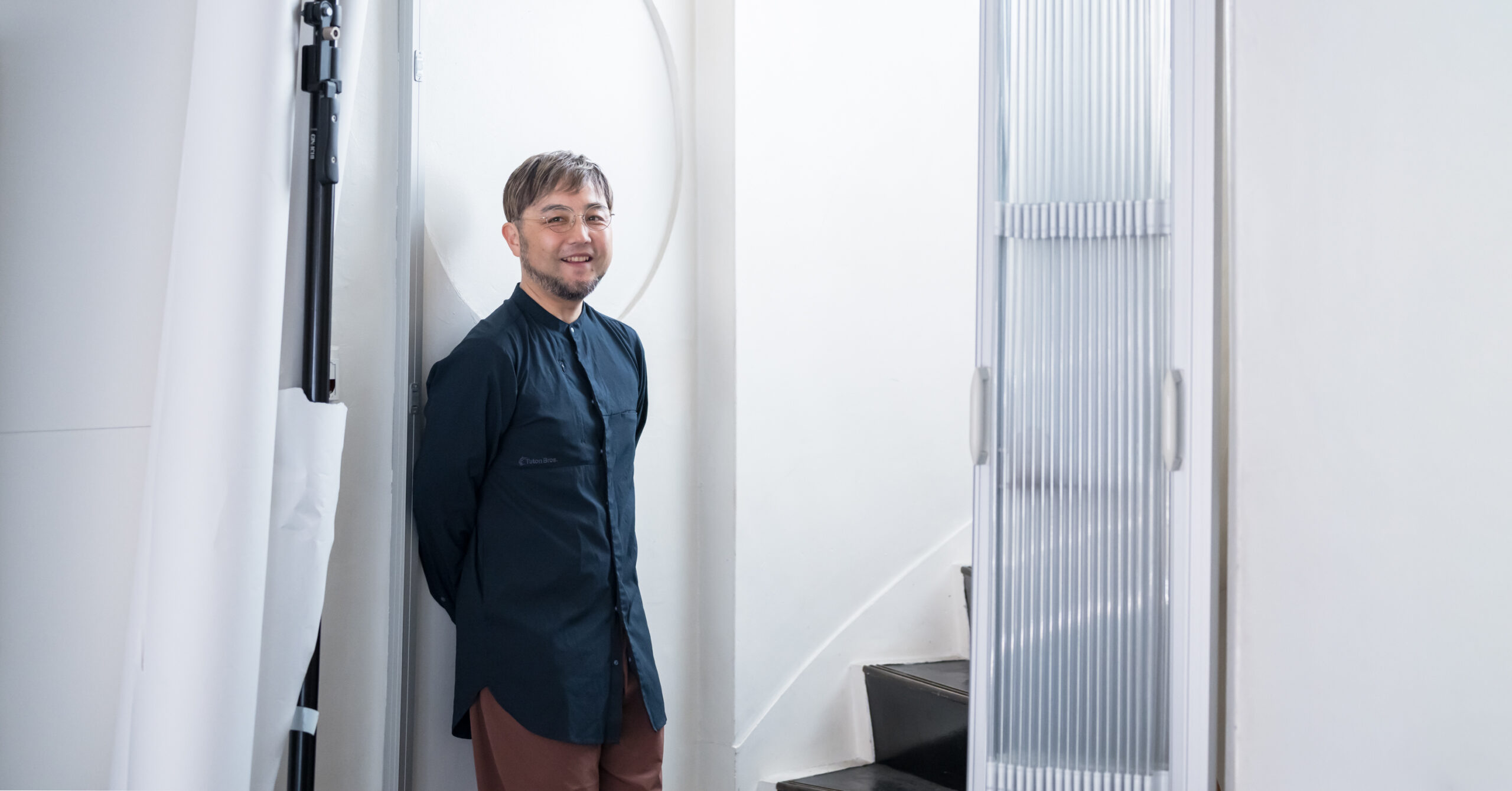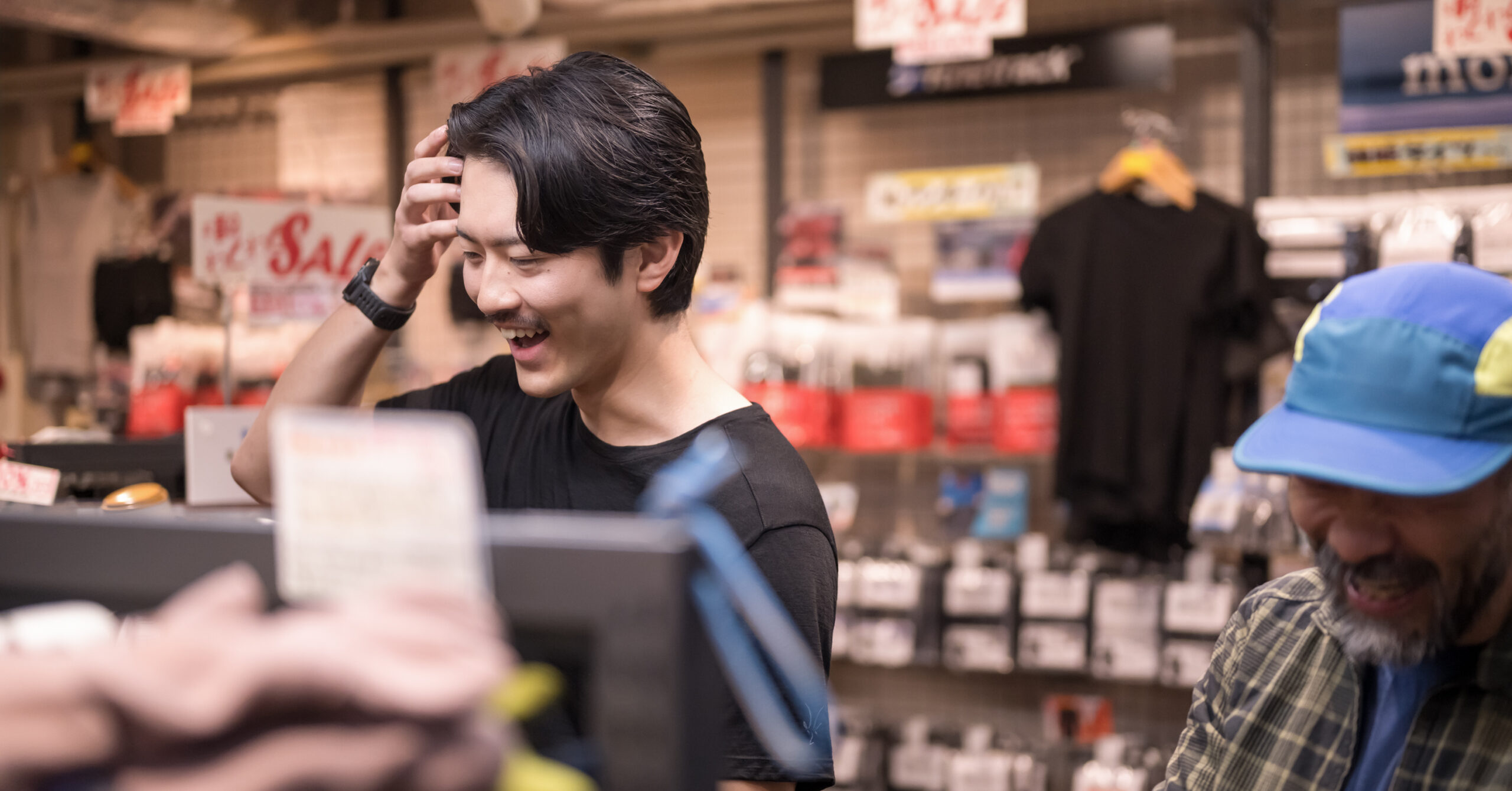



Ryuta Tsuchiya serves as a sort of “hub” who manages products on STRIDE’s order processing system and coordinates with every department—that is his role. His responsibilities span a wide range, from registering product information to coordinating with the warehouse and system development.You might expect a system that prioritizes efficiency and makes full use of AI, but surprisingly, the “analog” aspects seem to play a crucial role.
Text by Toshiaki Ito
Photos by Shinichi Yajima
From the Auto Dismantling Business to Stride
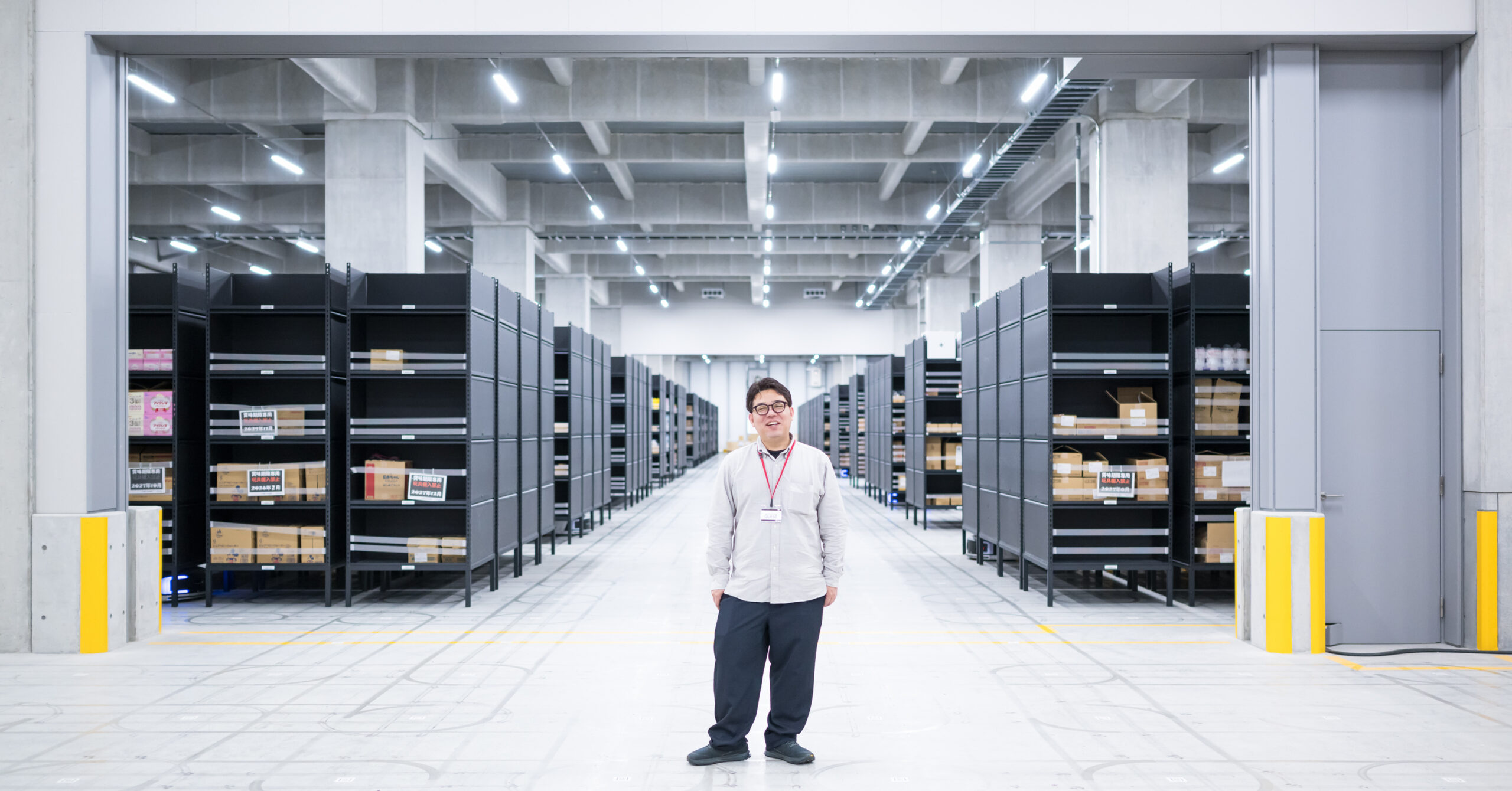
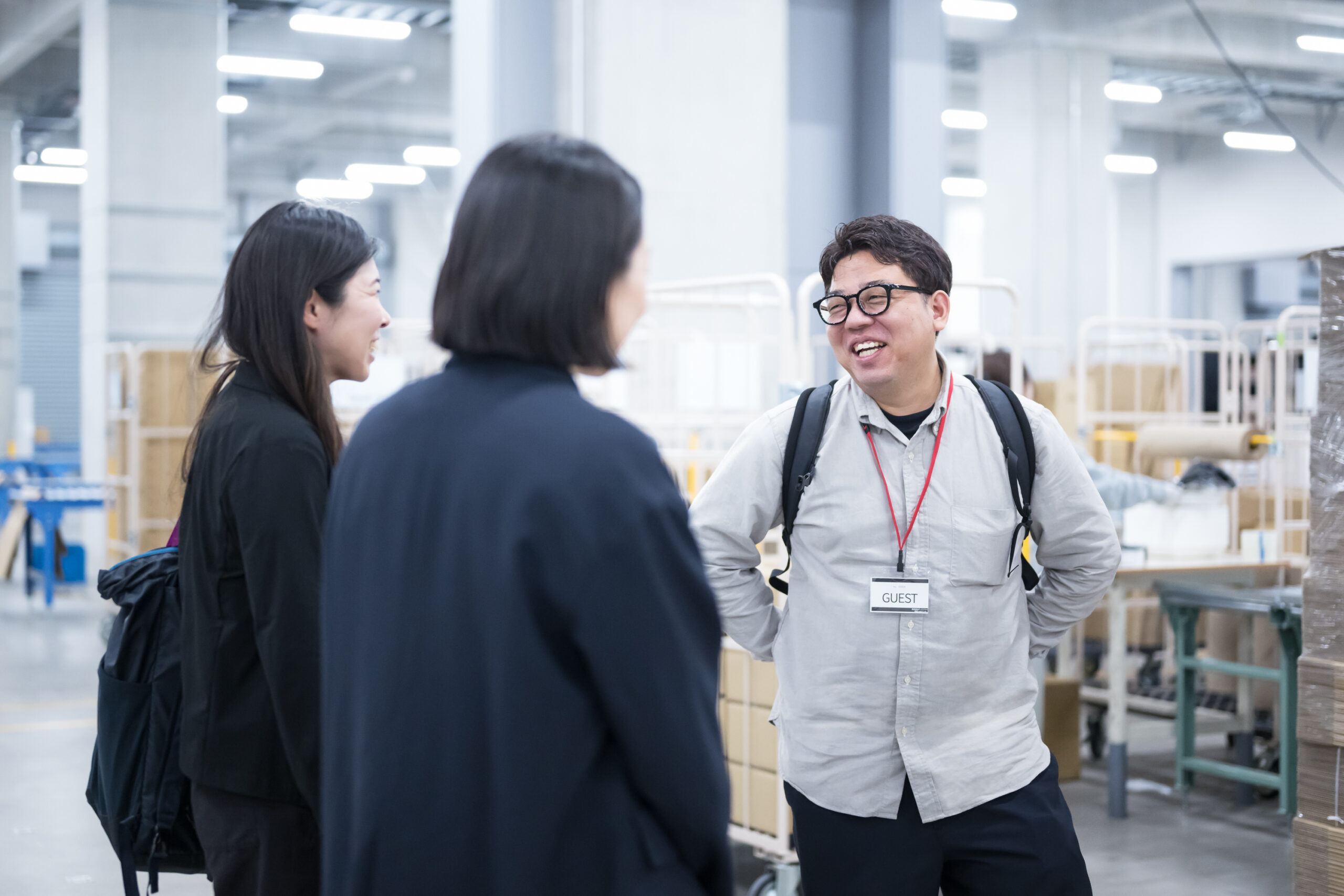
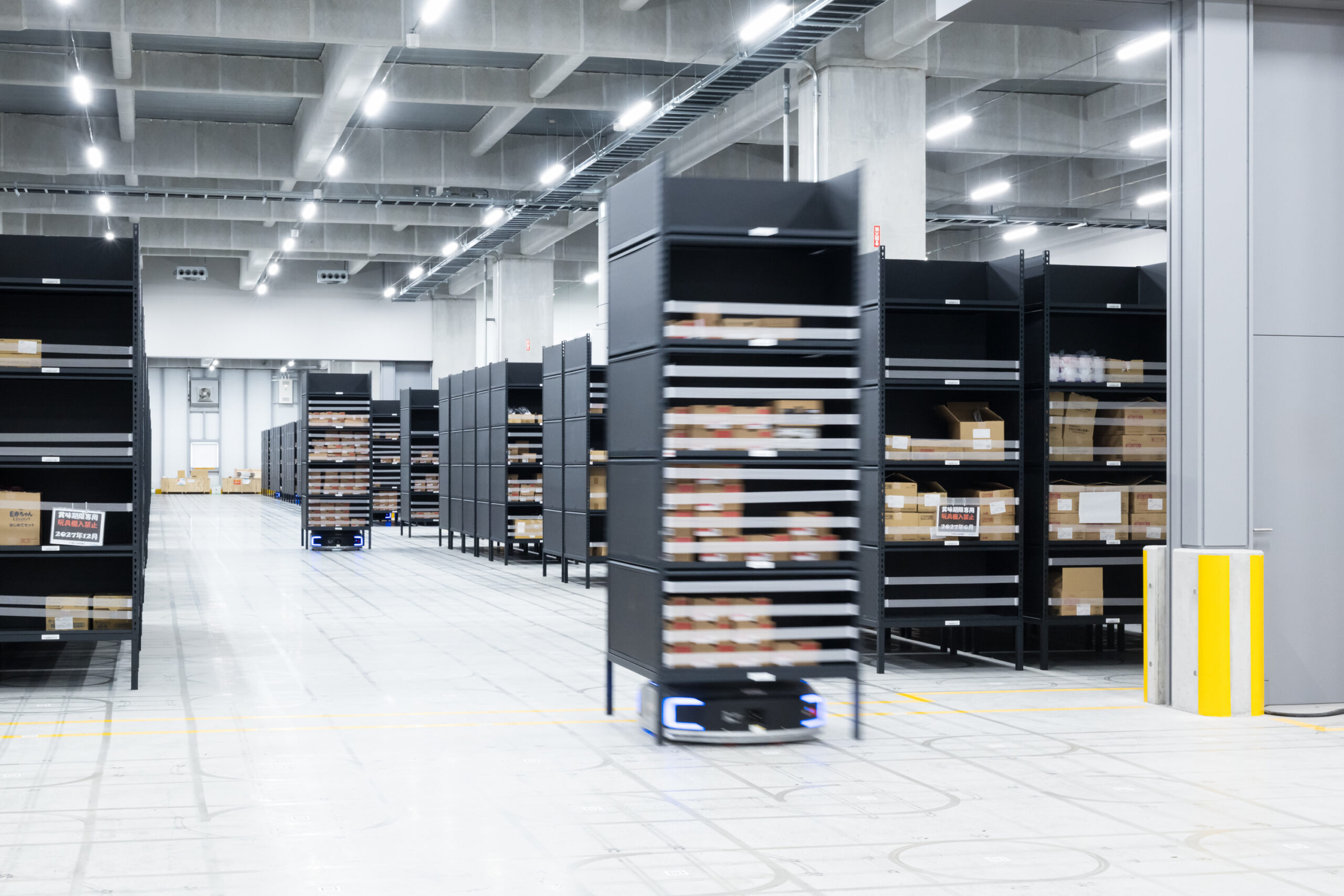
The state-of-the-art logistics warehouse was far more massive than I had imagined from the highway. The interior, with its high ceilings, was so quiet that I wondered if it was closed for the day. Despite the building’s immense size, there was an extremely sparse human presence, and this imbalance created a strange sense of unease.
The handful of staff members—fewer than you could count on one hand—were likely sorting and packing items for shipment. However, they remained almost entirely at their workstations and didn’t move around to pick items.Instead of people going to find the products, the shelves move to bring them right to the workstations. There is absolutely none of the clutter or the smell of sweat one might associate with the word “warehouse.” This sleek space, designed with a relentless pursuit of efficiency, even exudes a sense of cleanliness.
Stride is currently undergoing a major transformation.
The company is consolidating its entire domestic inventory into this warehouse—located about an hour’s drive from its headquarters in Ningyocho, Tokyo—while simultaneously working to update its online order management system, which business partners use, to make it more user-friendly.
At the center of this project, which involves various departments, Ryuta Tsuchiya serves as the hub.
Stride primarily deals in sports and outdoor products, and many of its staff are enthusiasts themselves. However, not everyone is a hardcore player. Tsuchiya’s previous job was in the auto dismantling business, and he leveraged that experience when he joined Stride.
In the automotive industry, the market for affordable rebuilt parts has become an indispensable part of the business.Cars that have reached the end of their useful life aren’t simply scrapped; they’re dismantled, and usable parts are reused.
Tsuchiya started out on the dismantling floor and eventually moved into an administrative role. He assesses the condition of parts to set prices, manages inventory, and lists items for auction. His experience with the entire process in the recycled parts market has directly led to his current role.
“I’ve always been a hobbyist.”
He’s originally from Saitama Prefecture. He says that even back in kindergarten, he used to go to the Omiya railcar depot just to watch the trains. In the early grades of elementary school, he developed a love for cars—which were more accessible to him—and he remains a car enthusiast to this day. As soon as he turned 18, he got his driver’s license “right away,” bought his own car, and customized it himself.He found a job that stemmed from his hobby.
“People often say you can combine business with pleasure—that’s exactly how it felt for me, and it was the best job I could have asked for.”
It was his ideal workplace, but after more than 10 years—during which he gained experience in every department, from the front lines to behind-the-scenes roles—he felt he had accomplished everything he could there. This realization sparked a desire to take on a new challenge, and he made the decision to leave. When he mentioned to his hobby buddy, Makoto Iizuka, that he was thinking of changing jobs, Iizuka invited him, saying, “Well, why don’t you come work for us?”
I met Iizuka—who is in charge of design and other creative work at Stride—at a local bar where he had once designed the interior. We shared common interests, such as road biking, and hit it off right away. Stride was looking for a replacement at that very moment, as the person in charge of managing their order management system had just resigned.
Of course, I’d heard that the main job involved registering and managing products in the order management system. I knew there would be things I wouldn’t understand since I was switching industries, but I felt that this kind of steady, methodical work would suit me, and I was also interested in the outdoors.
“Mr. Iizuka told me, ‘As long as you can use Excel, you’ll be fine.’ And he was definitely right (laughs). It was a field I wasn’t familiar with, so I was a bit nervous, but I actually settled in surprisingly smoothly.”

I know every item across all brands
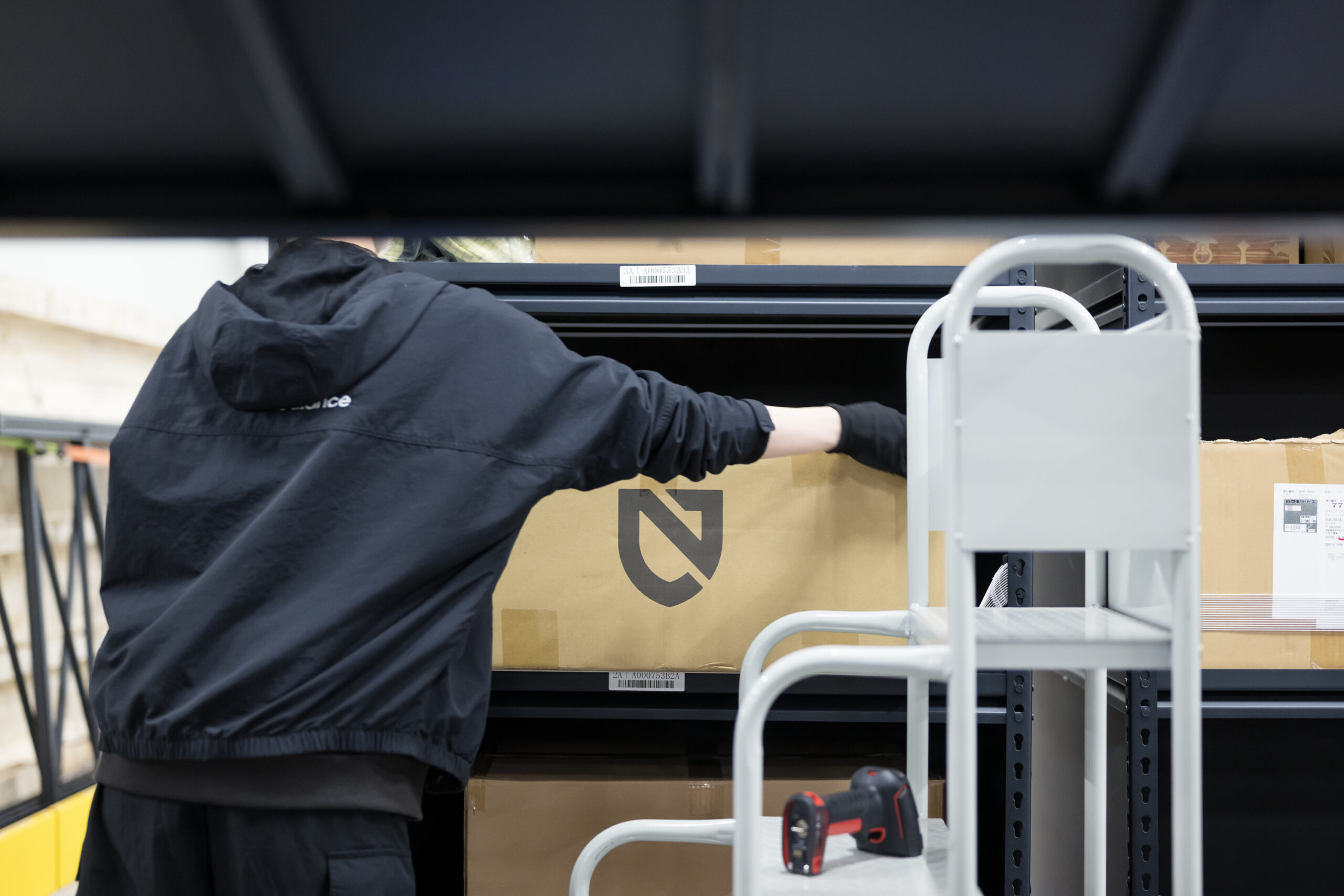
The Merchandising Department’s Operations Section is a one-person department headed by Tsuchiya. His main job is to enter and manage product information in the order management system used by wholesale customers. He ensures that all information—including the JAN code, which identifies the brand and product, as well as product size and color—is entered accurately and completely.
For example, when a decision is made to carry a new brand, Tsuchiya is the first to enter all product information into the system. Since the data is used for sales activities and is linked to the online store for end users, many business operations would come to a standstill if Tsuchiya’s work were not completed. Entering the data isn’t a one-time task; whenever product information or prices change, he makes the necessary updates.
“When I joined the company, I was told, ‘This is a job where you’ll serve as the hub for everyone.’ It’s hard to explain exactly what I do, but it feels like I’m dipping my toes into the work of various departments, a little bit at a time.”
What makes this job challenging is that there are inevitably parts that cannot be automated. While brand managers create the source lists according to a set format, the specific items that need to be entered into the system vary by brand and product, so I have to review each one individually. The tasks themselves aren’t difficult, but they require patience and concentration.
“Accurate, error-free, and fast. I think that’s what’s expected of me. The worst-case scenario is causing trouble for our distributors or end users. At one point, I realized that what I’m doing is actually directly linked to the company’s problems.”
It’s especially challenging when we suddenly have to start handling multiple brands. While there are limits to both the time available and the volume of work I can handle, I rely on the “on-the-ground spirit” I developed in my previous job to push through—almost out of sheer determination.
“I’m not very good at prioritizing tasks, but my kind senior colleagues help me out. I think I’ve managed to build good relationships with both my seniors and juniors.”

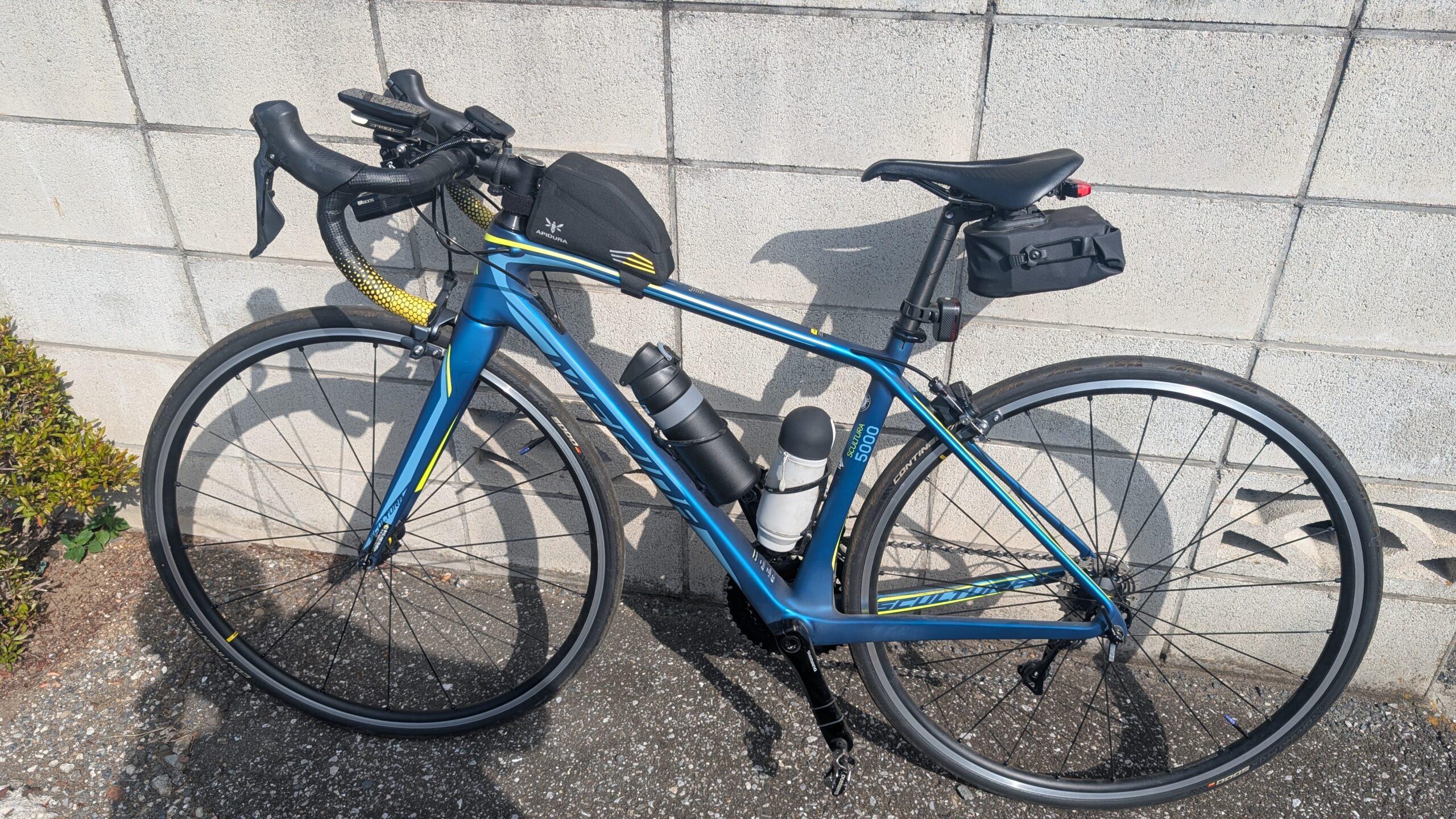
I don’t consider myself particularly efficient, but I enjoy and am good at steadily working through detailed tasks. For example, with my hobby of cycling, I’ll adjust the number of teeth on the rear sprocket and reassemble the bike to find the best setup, or go to the gym to build leg strength. Even if I don’t get much faster overnight, my times reflect the results of my steady, consistent effort.
The arrival of new products and brands is a sign that things are about to get busy, but it’s also something I look forward to.
“Whether it’s new products for each season or new brands coming in, I get access to information at a very early stage. Being able to spot trends like, ‘So this is the color scheme they’re going with this year,’ before anyone else gives me a sense of satisfaction.”
At Stride, which carries many brands, I’m one of the very few people who reviews every single item across all brands—and, to be precise, every color and size as well.
“Even with zero-drop shoes, preferences can vary completely from country to country. I find it fascinating to see those differences.”
What makes the job rewarding is seeing the other person’s delight.
While the primary goal of the warehouse relocation is to streamline operations, there’s also great anticipation that it will enable shipments on Saturdays and Sundays—something that wasn’t possible before. Since our main wholesale customers—outdoor shops—are open during the day, order processing often takes place at night. To ensure stores don’t run out of stock, we’ve received many requests in the past asking, “Please ship on weekends as well.”
The issue is the sheer volume of items involved in the transfer. How do we move inventory totaling roughly 100,000 items? At what point and at what pace should we move inventory from the currently operational warehouse? What will the associated costs be? And will I be able to handle it all?
On top of that, we’ll have to shut down the order management system while the products are being moved. Shutting down the system means sales come to a halt. While it’s best to keep the downtime as short as possible, causing problems due to rushing would defeat the whole purpose. We plan to launch the new system simultaneously with the transfer, and we’re aiming to create a better system by incorporating requests from each department into its specifications.
When I asked if the transition would make my work easier by improving efficiency, he gave a wry smile and said, “I don’t think it’ll be that simple.” He anticipates that there will likely be glitches until we get used to the new system, and that adjustments will be necessary.
It looks like my busy days as the sole member of the department will continue for a while yet.
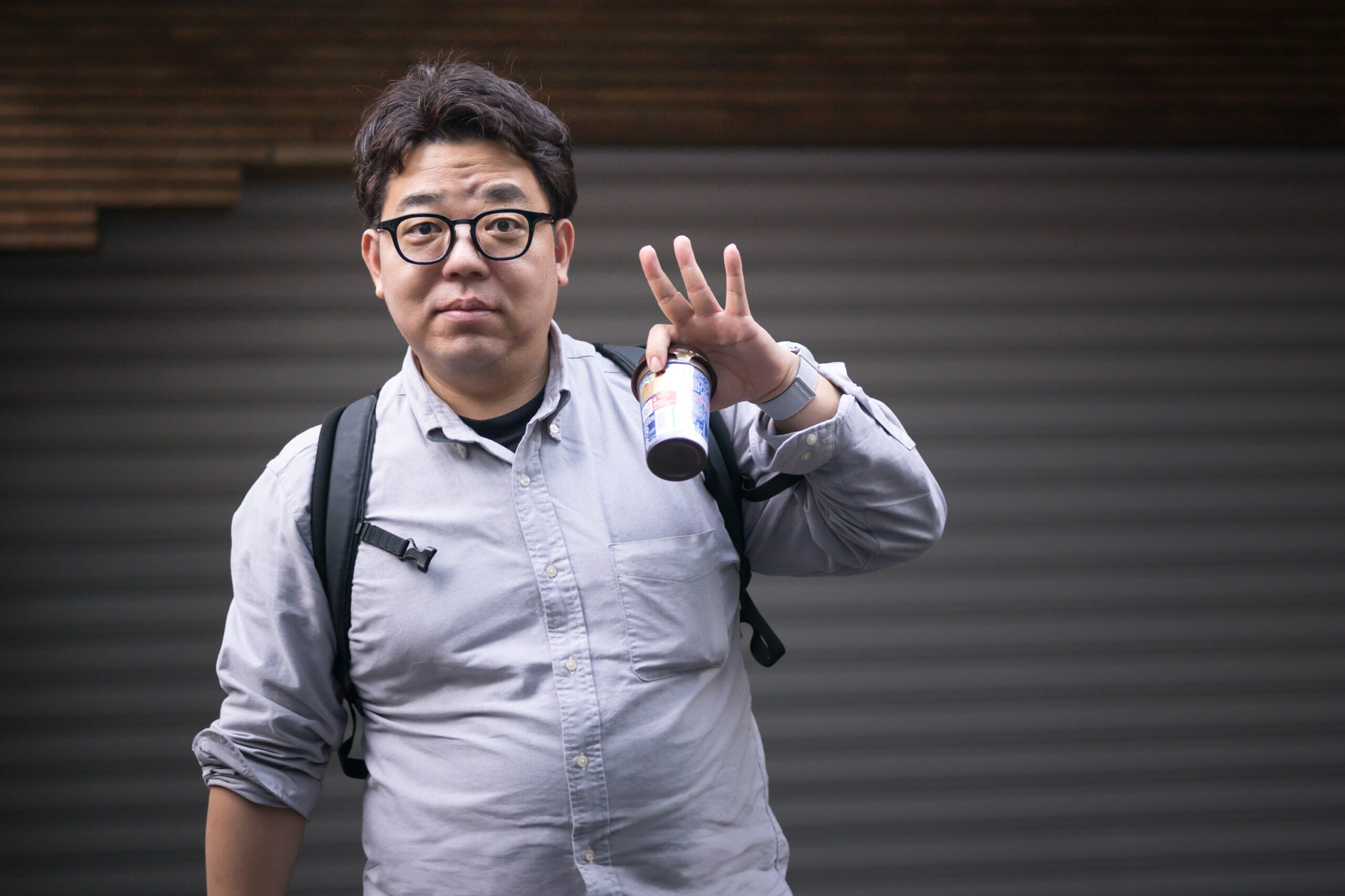
Profile
Ryuta Tsuchiya
Born in Saitama Prefecture. I’ve loved machines since I was a child and spent all my free time pursuing hobbies like trains, cars, Mini 4WD, radio-controlled cars, model guns, and bicycles.Since joining Stride, he’s recently developed an interest in camping. He loves coffee and is planning to put together a “coffee kit for anywhere” so he can go brew some by a riverbank. His goal for this year is to participate in the “Yuwatari 100” race held in Yugawara, Kanagawa Prefecture. “I’ll make good on my word!”