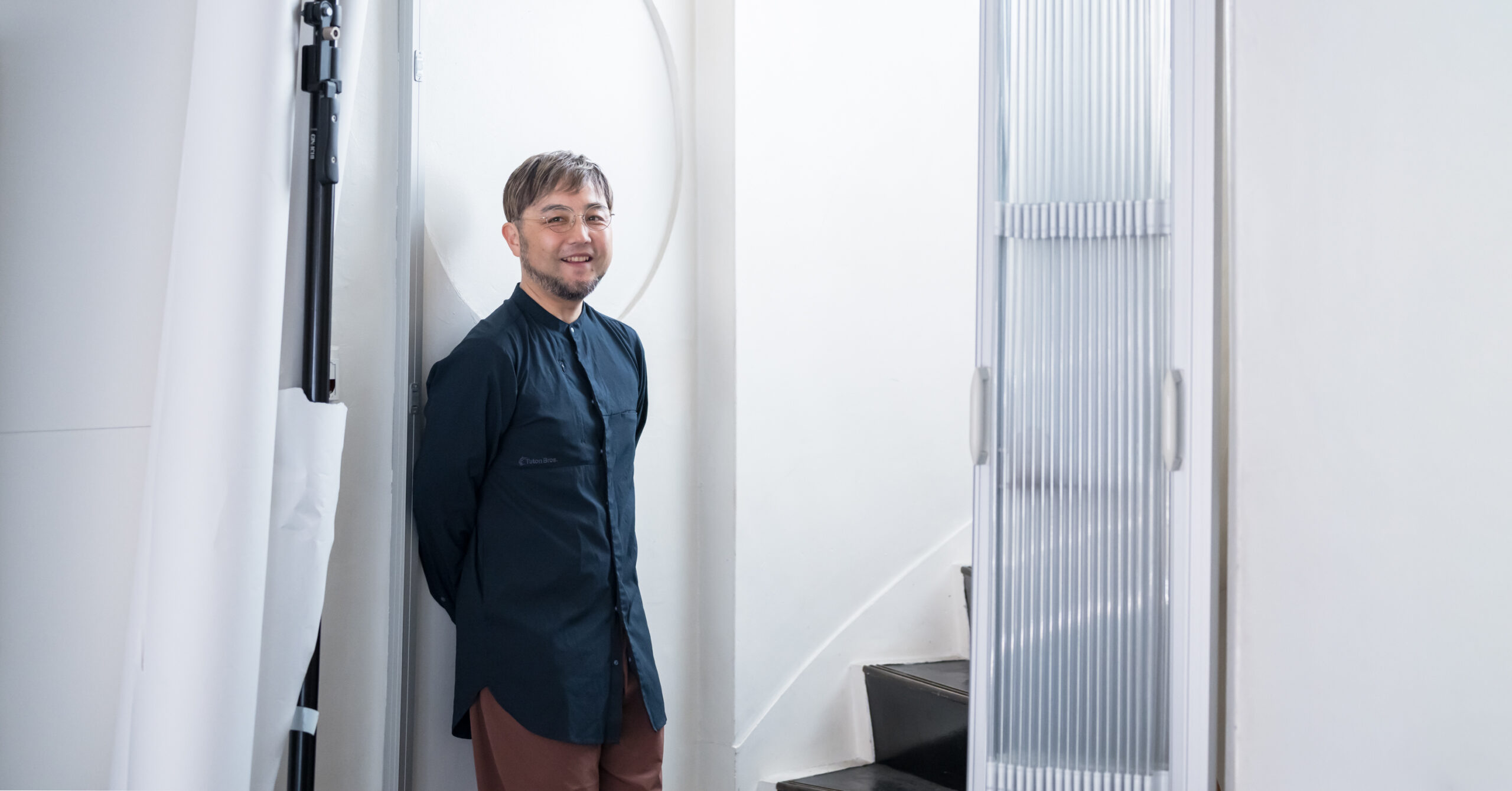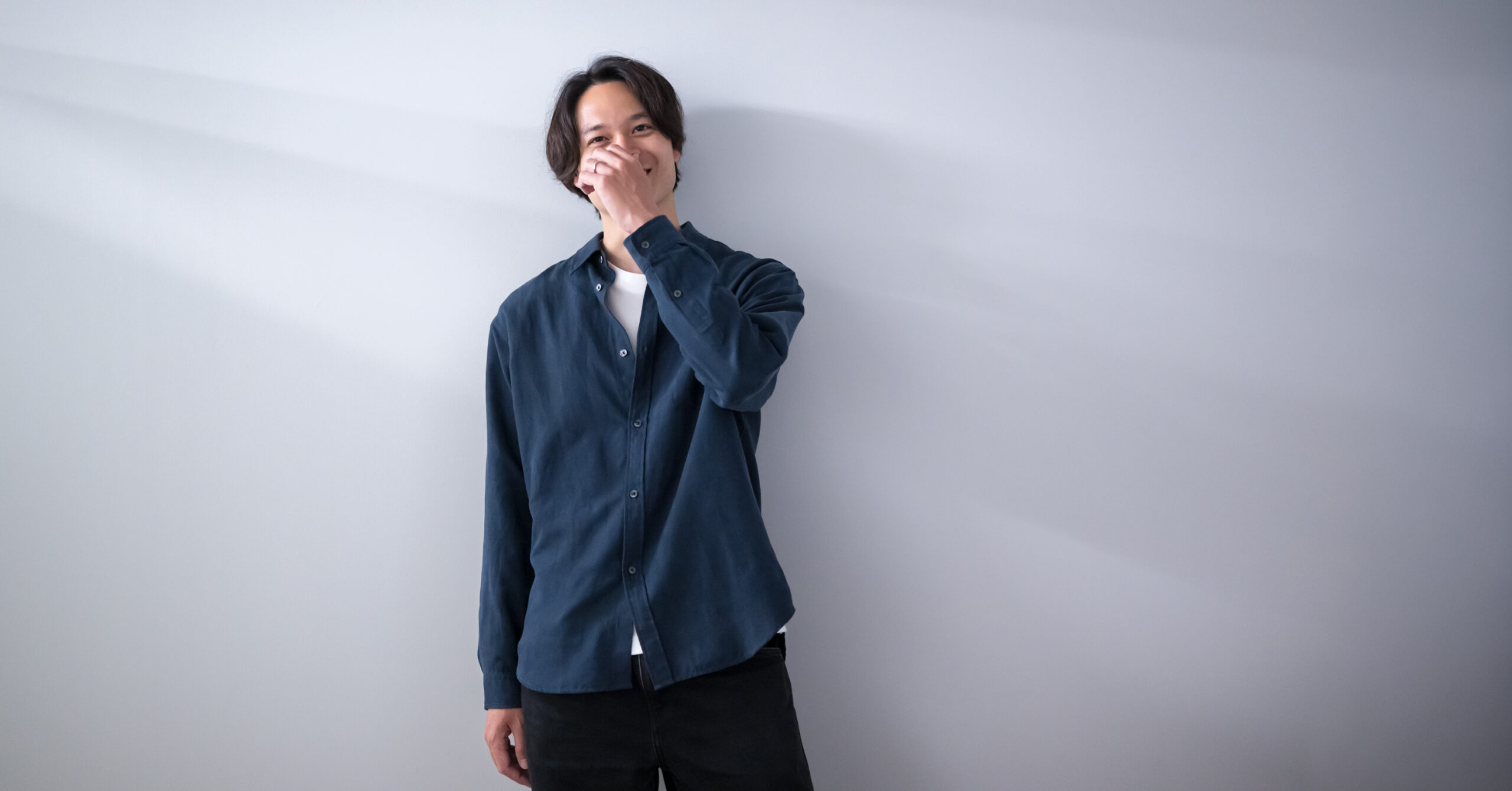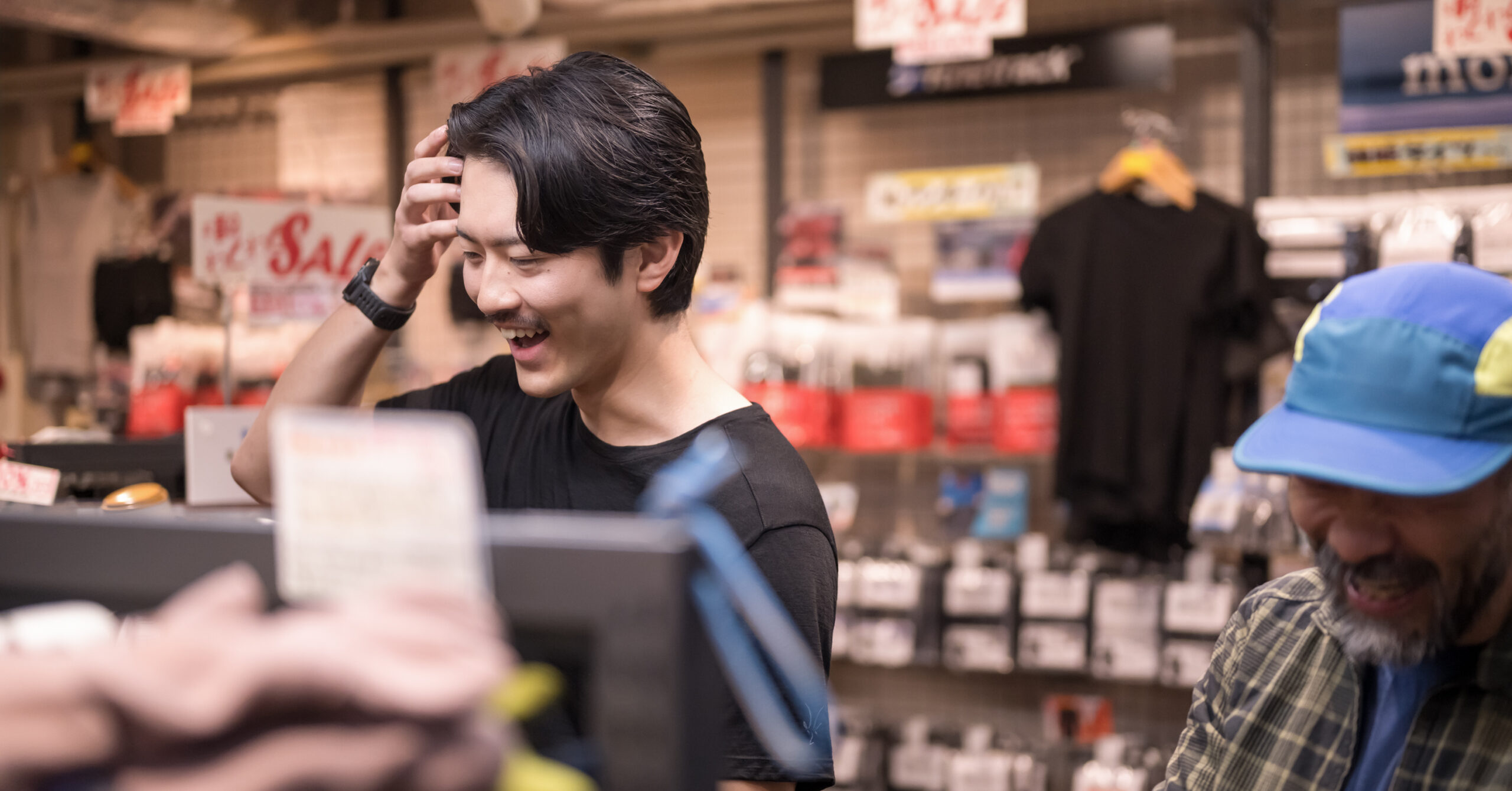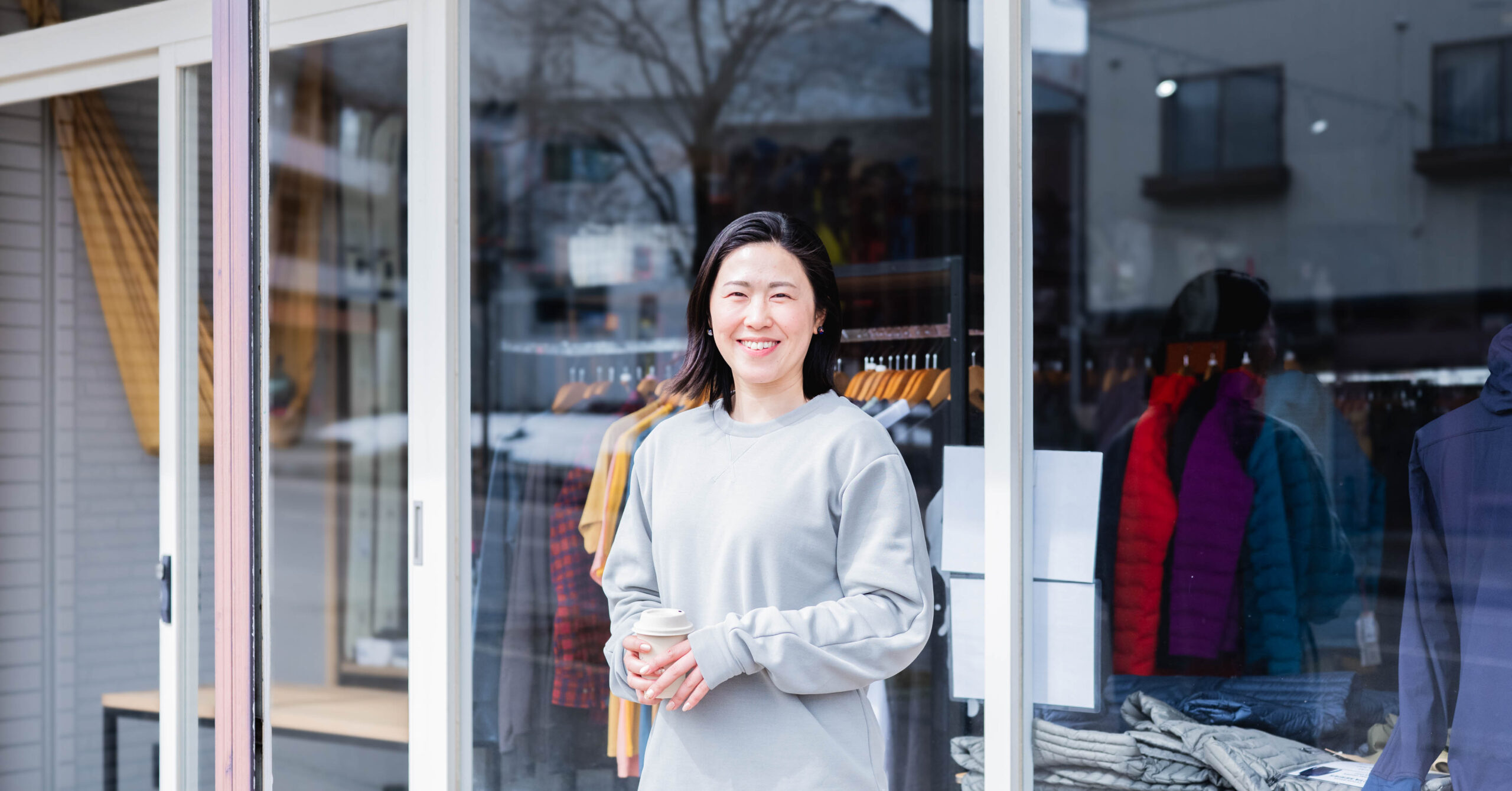



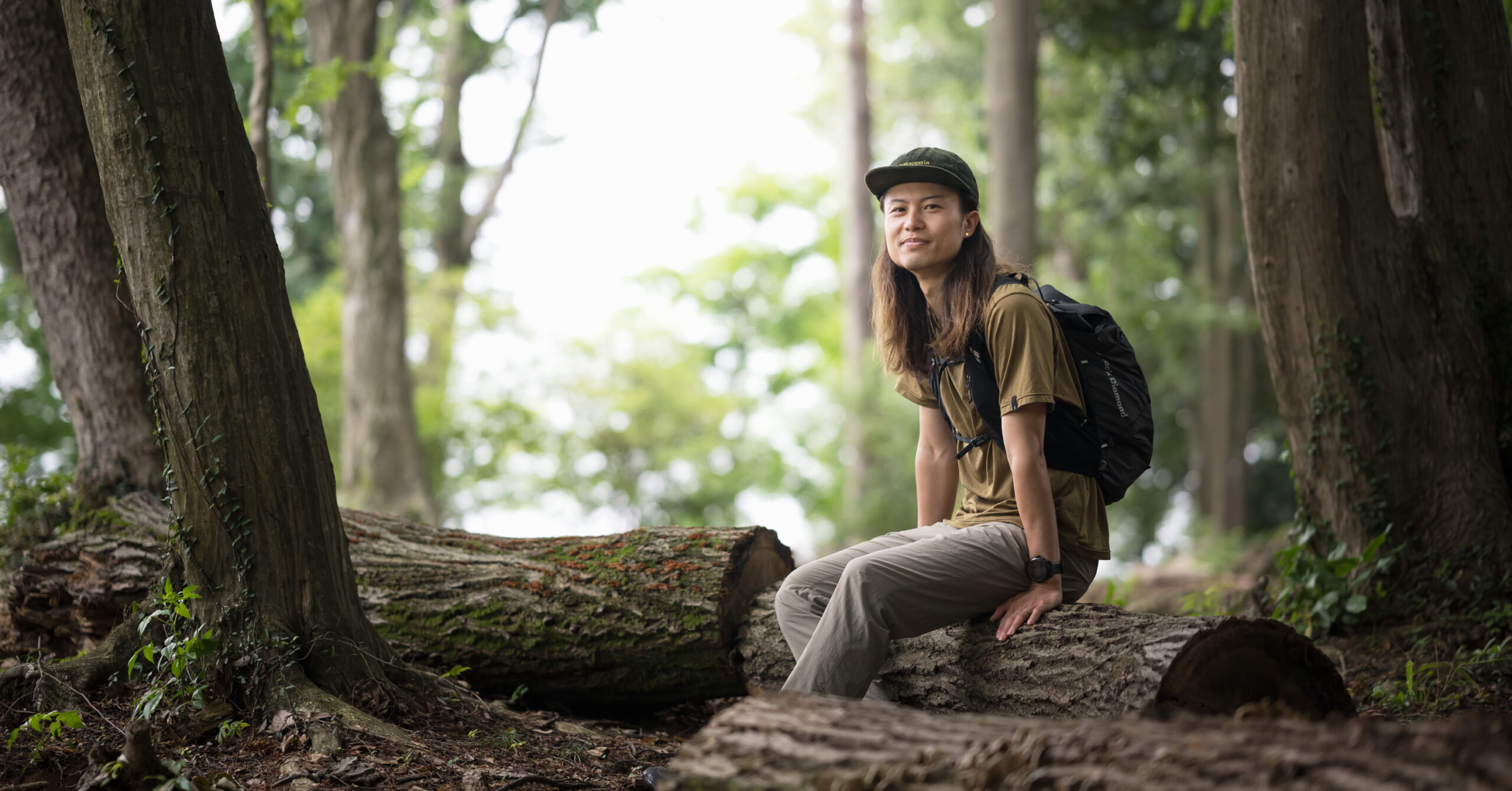
He loves running and spending time in nature. That pure passion eventually led him to his career. Itsuki Hoshi, store manager of the STRIDE LAB Takao branch, has broadened his horizons by transitioning from track and field—where he aimed to compete in the Hakone Ekiden—to trail running, and from there to enjoying a wide range of outdoor activities.Pursuing what you’re passionate about can turn into a career that brings joy to others. Here lies one ideal for those who have turned their “passion” into a career.
Text by Toshiaki Ito
Photos by Shinichi Yajima
From the Road to the Trail
The Stride Lab Takao branch is located on the fourth floor of a building facing the roundabout in front of Takao Station. While Takao is best known for Mount Takao, the station closest to the trailhead of the world’s most-visited mountain is actually the neighboring Takaosanguchi Station.Although the mountain is right there, Takao—a little removed from the hustle and bustle of the “world’s most visited mountain”—has the feel of a quiet, peaceful bedroom community.
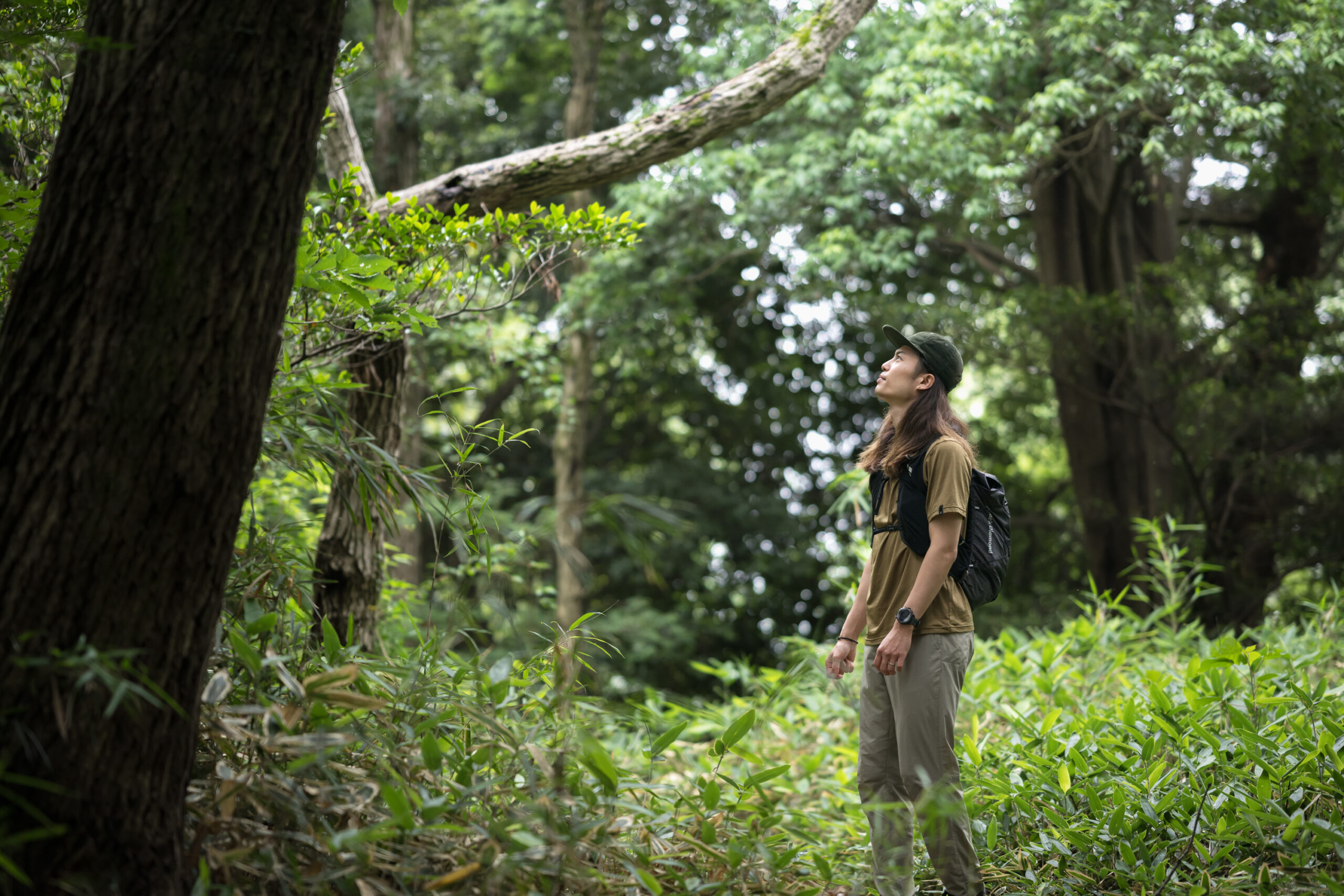
I had arranged to be shown around nearby Mount Hatsusawa, so I met with store manager Itsuki Hoshi at 9:00 a.m., before the store opened.It’s a 10-minute walk to the trailhead. After passing through the torii gate and climbing the steep stairs to Takao Tenjin Shrine, the trail winds around the shrine buildings. It must be a popular local walking route. The well-trodden dirt path feels pleasant underfoot. Although it’s called a mountain, it’s only 294 meters high, and it takes less than 30 minutes to reach the summit.
“But this is just about right, isn’t it? It’s close by, and there aren’t many people. It’s quiet even on weekends.”
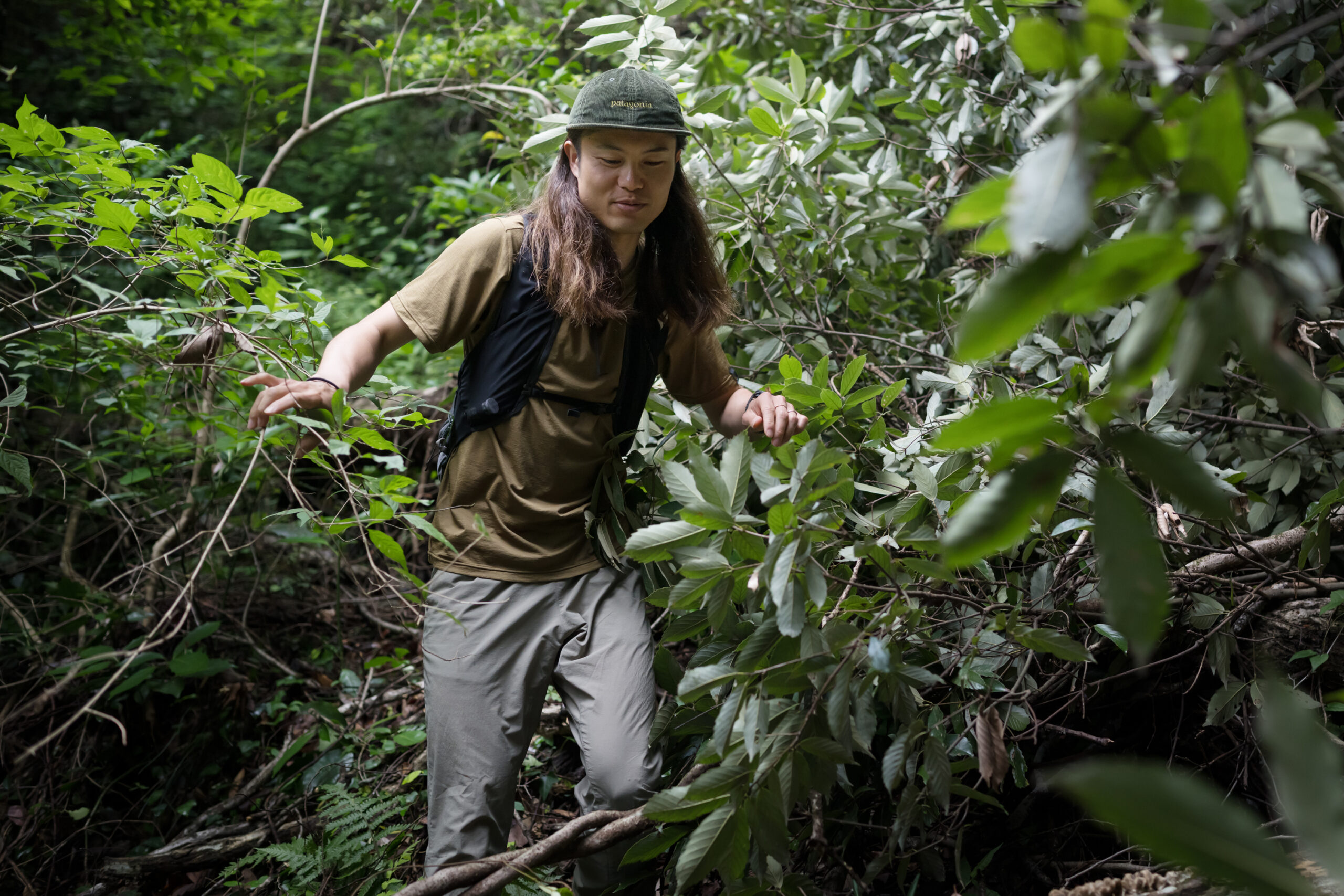
I chose a different path for the descent. This one doesn’t seem to be used very often. The undergrowth is thick, and ferns brush against the backs of my knees in my shorts. It’s a path that takes a sudden turn for the wild—I get caught in spider webs and have to crawl under or climb over fallen trees. It’s an easy-to-access yet fun satoyama.Any mountain lover would probably think, “It would be great to have a mountain like this nearby.”
For the Takao Store, Mount Hatsuyama is literally our home turf, and we head out to this mountain to have fun whenever we get the chance. We’ve even set up hammocks there and held map-reading events. Our weekly Friday night runs take place here, too. Since there are no dangerous spots, it’s perfect even for those trying a night trail run for the first time. We took it easy today, but I’ve heard some staff members even go for a solo run here before the store opens.
Hoshi has been running for as long as he can remember. He started running in middle school.
“In middle school, I was on both the soccer and track and field teams. I’ve always been a long-distance runner—I ran the 3,000 meters in middle school and switched to the 5,000 meters in high school.”
Like many high school long-distance runners, he dreamed of running the Hakone Ekiden, so he enrolled in a university with a strong track and field program and joined the track and field team. Although there was an ekiden team, only elite athletes who received special recommendations could join it. To transfer to that team, he had to run the 5,000 meters in under 15 minutes.
“I worked hard for a whole year, but I just couldn’t quite break 15 minutes.”
A 3-minute-per-kilometer pace is a top-level time, but breaking 15 minutes was, after all, merely the minimum requirement. Only a select handful of elite runners get to run in the Hakone Ekiden.
Although his dream didn’t come true, Hoshi began running trails instead.After watching the NHK documentary “Fierce Run Mont Blanc!”—which followed athlete Tsuyoshi Kaburagi as he ran the UTMB (Ultra-Trail du Mont-Blanc)—and reading the bestseller *Born to Run*, he had long been interested in trail running and barefoot shoes.

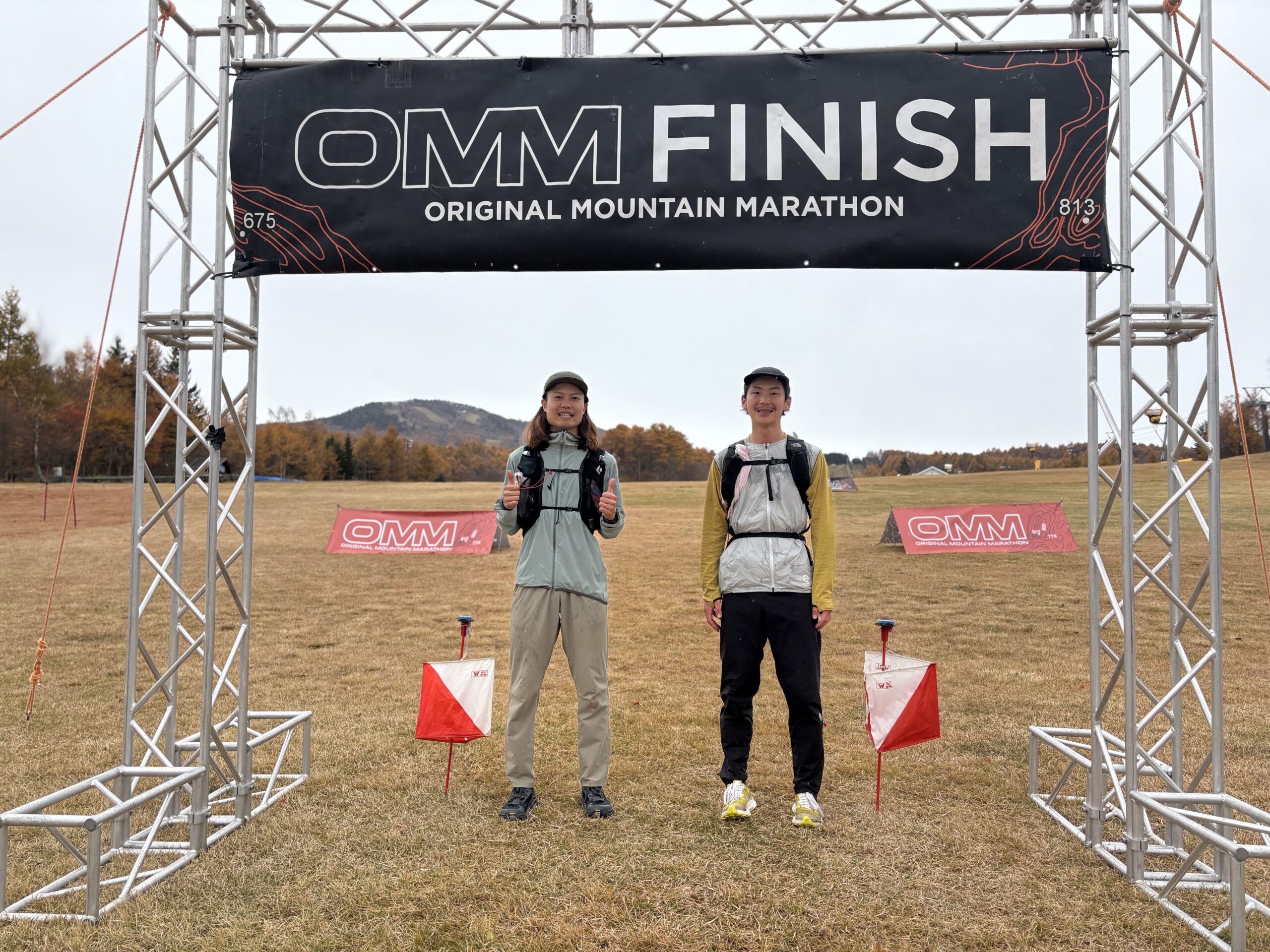
“I focused entirely on competitive sports until my freshman year of college, but ever since high school—when I’d read about it in books—I’d thought it looked interesting, so I started running with a senior from the track and field team when I entered my sophomore year.”
The first time I went running was on the Inariyama Course on Mount Takao. Running in nature felt like a whole new experience.
“Track and field practice involves running on the track or on the road. On the track, you just go round and round the same spot for 20 or 30 laps, but in the mountains, the scenery keeps changing. Just running through nature was fun.”
That’s how I got hooked on trail running, and I started participating in trail races alongside my activities with the track and field club. My first race over 100 km was the Joshu Hotaka Sky View Trail 120K.Toward the end of his college years, he also ran what was then known as the UTMF (Ultra-Trail Mount Fuji; now the Mount Fuji 100). (Unfortunately, that race was canceled midway due to rain, but he redeemed himself by finishing it in 2022.)
“I haven’t competed in any races for the past two or three years, but I felt like running again after a long hiatus, so this season I’m running the 110 km Shin-Etsu Gogaku. I’ve always wanted to run the Shin-Etsu,” he said.
The race is in September. Right now, he’s enjoying training with a race in mind for the first time in a while.
I want to share all kinds of games
I’m from Aizu in Fukushima Prefecture, a region blessed with great outdoor spaces. Raised by parents who loved the outdoors, I spent my childhood playing outside—camping and biking in the summer, and skiing in the winter. As I continued track and field through middle and high school, I began to feel that I wanted to pursue a career in sports.
“Since I had a history of injuries myself, I chose my university for two reasons: the opportunity to earn a trainer’s certification and the school’s strong track and field program.”
While competing, he struggled with shin splints, which caused pain on the inside of his shins. It was partly because of these injuries that he read *Born to Run* and became interested in barefoot shoes.
*Born to Run* is a best-selling book in which the author—who suffered from foot pain caused by running—encounters the Tarahumara people of Mexico, known as the “running tribe,” and unravels the mystery of the human “ability to run.”The Tarahumara, who wear thin huaraches made from old tires, do not rely on shoe cushioning to land on their heels; instead, they strike the ground with the forefoot. This running style brings out the natural cushioning function of the human foot.
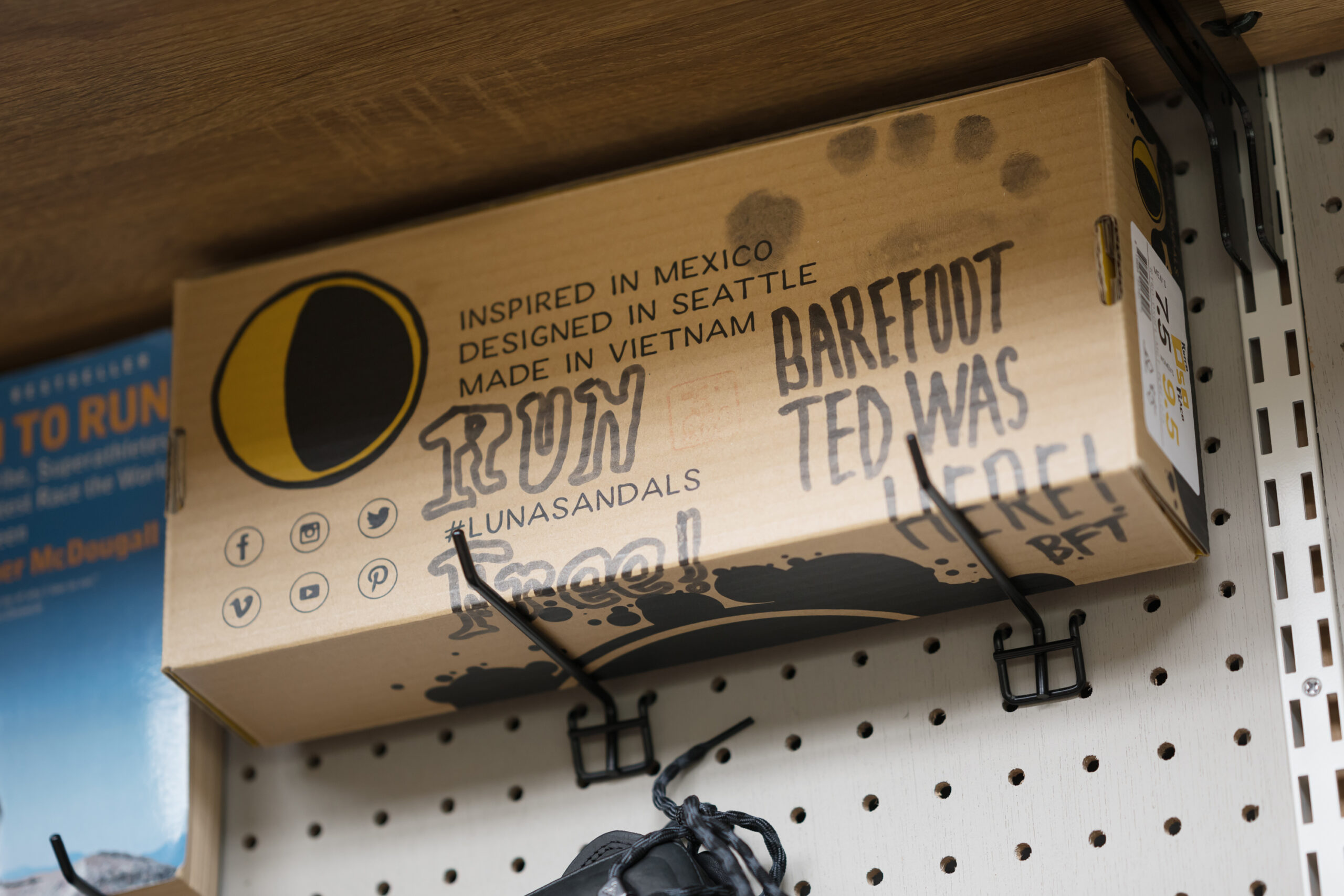
As a side note, “Barefoot Ted,” who appears in this book, created LUNA SANDALS based on the huaraches worn by the Tarahumara.It is one of the major brands that Stride has carried since its founding. The brand’s name comes from Manuel Luna, who taught Ted how to make huaraches.
But that’s beside the point. When Hoshi first started trail running, Stride Lab didn’t exist yet, but I was already aware of Luna Sandals and Altra. One day, I heard about an Altra pop-up event and rushed over, full of anticipation.
“I bought a pair of Altra Superiors back then. The Luna Sandals were available too, but since I was still a student, I couldn’t afford to buy both…”
That’s when my relationship with Stride began, and once Stride Lab opened, I started dropping by from time to time.Starting with trail running, I also began trying activities like fast packing—where you head deep into nature quickly and far with minimal gear—and I started wanting to work in the outdoor industry.
“I just thought it would be great if playing could become my job (laughs).”
In the end, I didn’t get my trainer’s certification, and after graduation, I got a job at an outdoor gear manufacturer. I started working at one of their company-owned stores.
One day, when I visited Stride Lab, the CEO, Takashi Fukuchi, was on the phone. They were just about to open a store in Nagoya and were looking for a candidate to be the store manager.
“After he hung up, Mr. Fukuchi asked me, ‘Would you like to work at the Nagoya store?’ and before I knew it, I’d answered, ‘Yes.’”
Back when I was still a student, I’d once asked Fukuchi, “Are you hiring?” The timing wasn’t right then, but as time passed, the opportunity finally came around.Although I already had a job, I decided to make the move immediately. That’s how Hoshi became a member of Stride. After serving as manager of the Nagoya branch for two and a half years, I was transferred to the former Tokyo Main Branch (Seiseki Sakuragaoka). When the Takao branch opened, I became its manager.
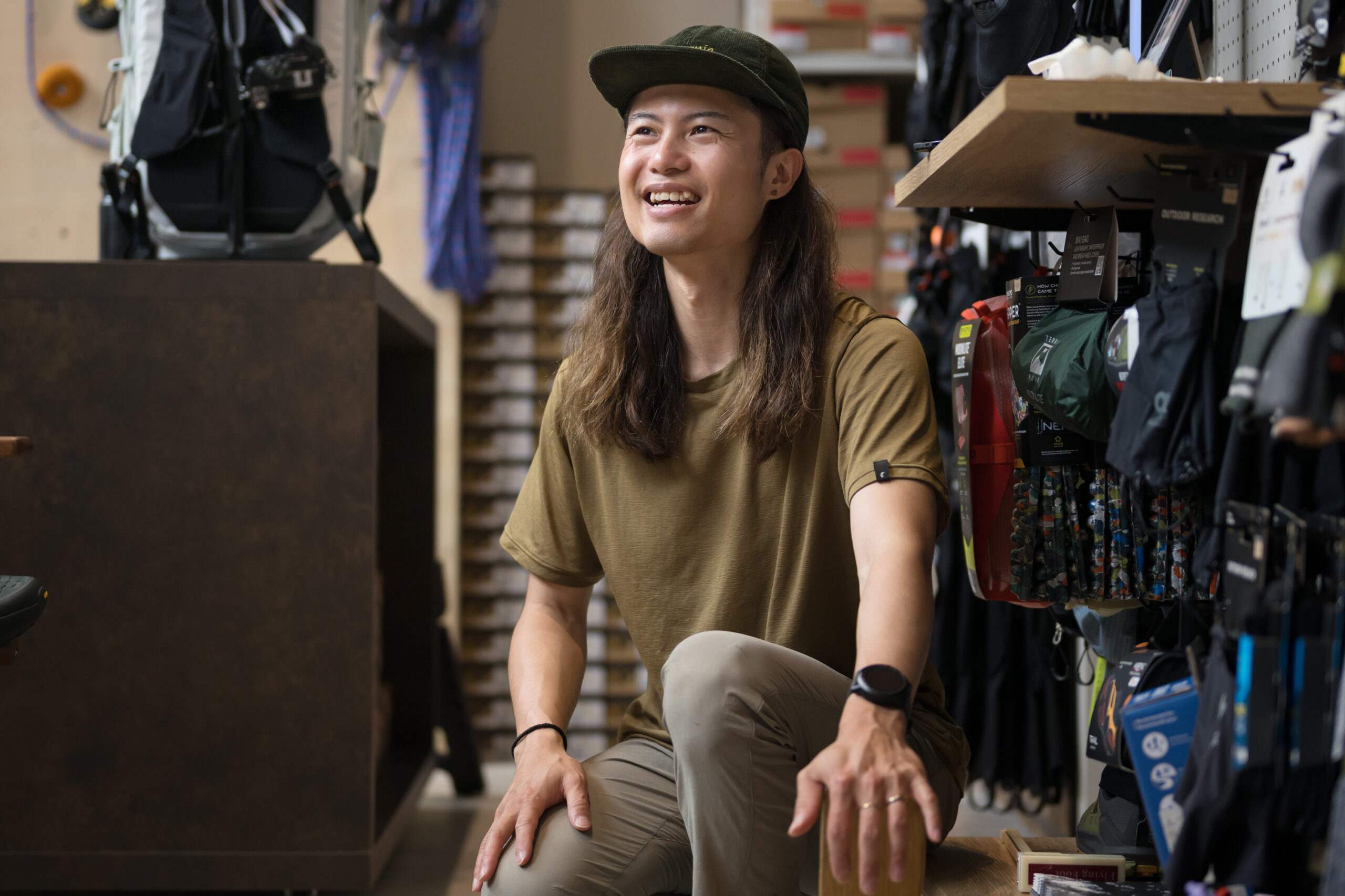
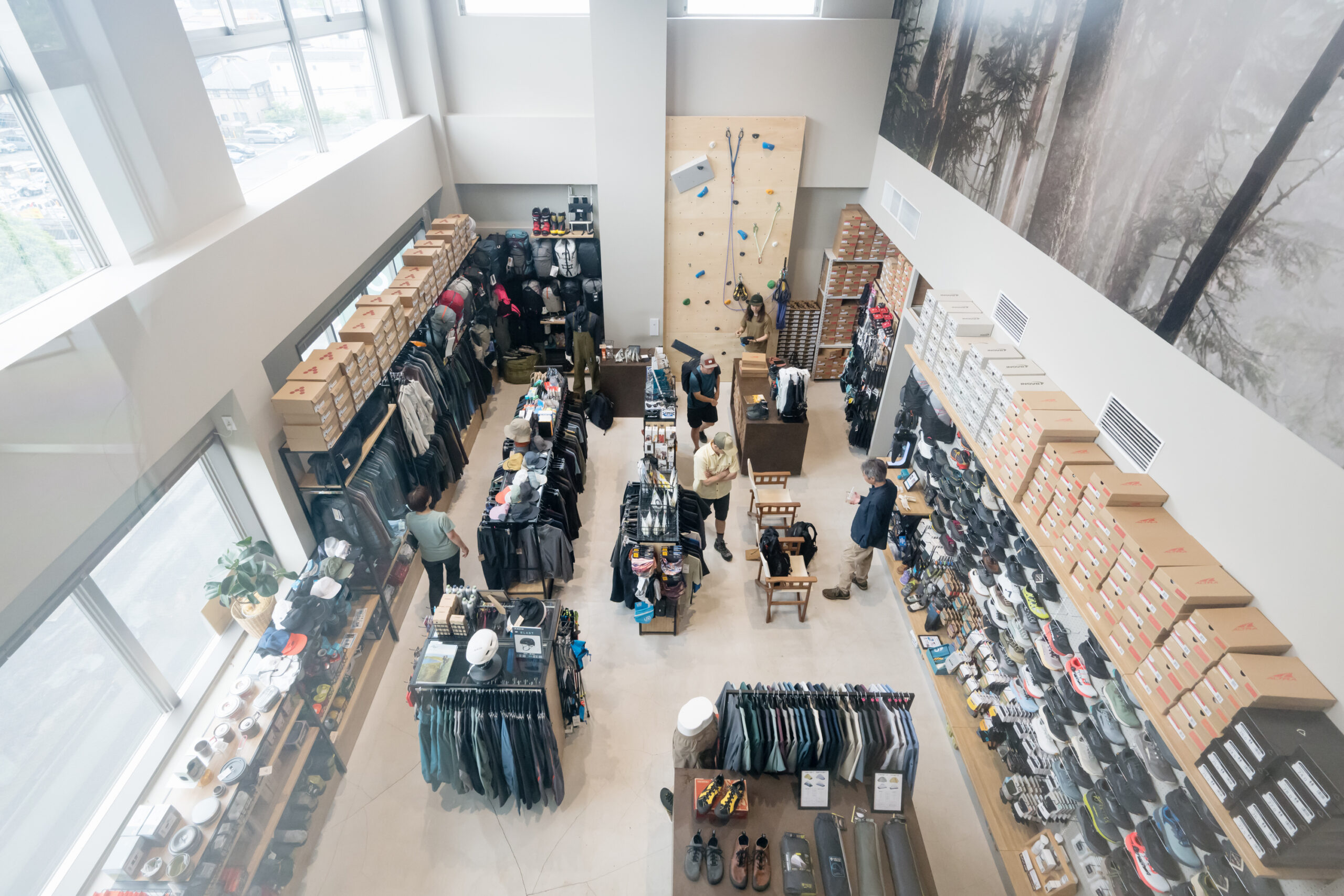
Among all the Stride Lab stores, the Takao branch has a particularly strong outdoor focus. Hoshino personally curates the selection of products carried there.
“Customers often stop by on their way back from the mountains. Takao is a convenient transfer station, after all.”
On the second floor of the same building, there’s a Takao Beer microbrewery and a café serving delicious coffee, so people who come for those often pop in here as well. After the Friday night run wraps up, we like to cap off the evening with a beer.
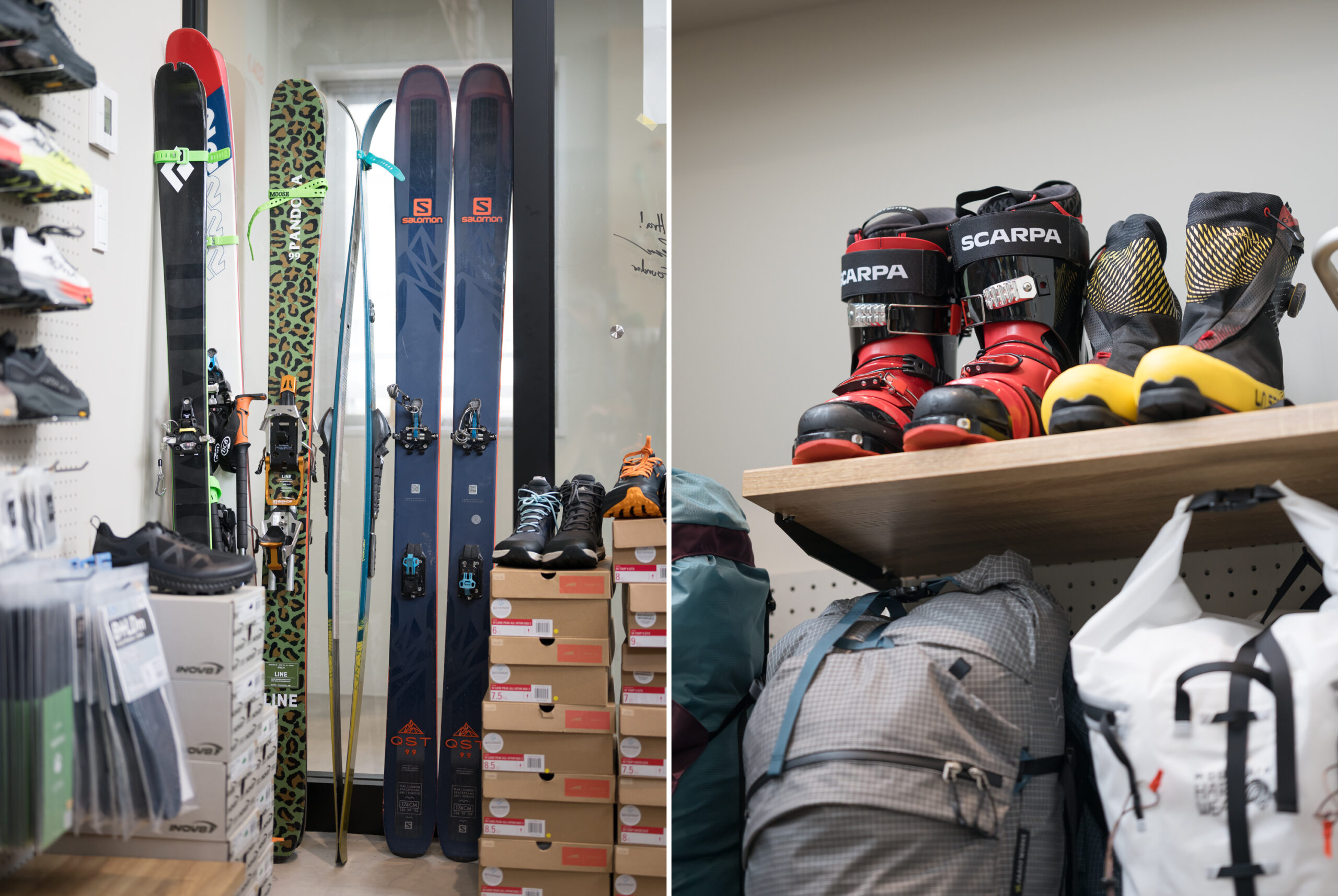
The store’s open-concept interior, with its soaring ceiling, offers a selection that’s a cut above what you’d find in larger stores. Reflecting Hoshi’s preference for technical gear, the selection features practical items that aren’t flashy. Alongside the carefully curated gear, his personal belongings are scattered here and there. If a customer asks, “What’s this?”—that’s a win.
“I want our customers to try all kinds of outdoor activities. Lately, there are a lot of people who only do trail running or only go hiking, but I think it’s more fun to try a variety of things without limiting yourself, and that’s the message I want to convey. I hope this serves as a conversation starter (laughs).”
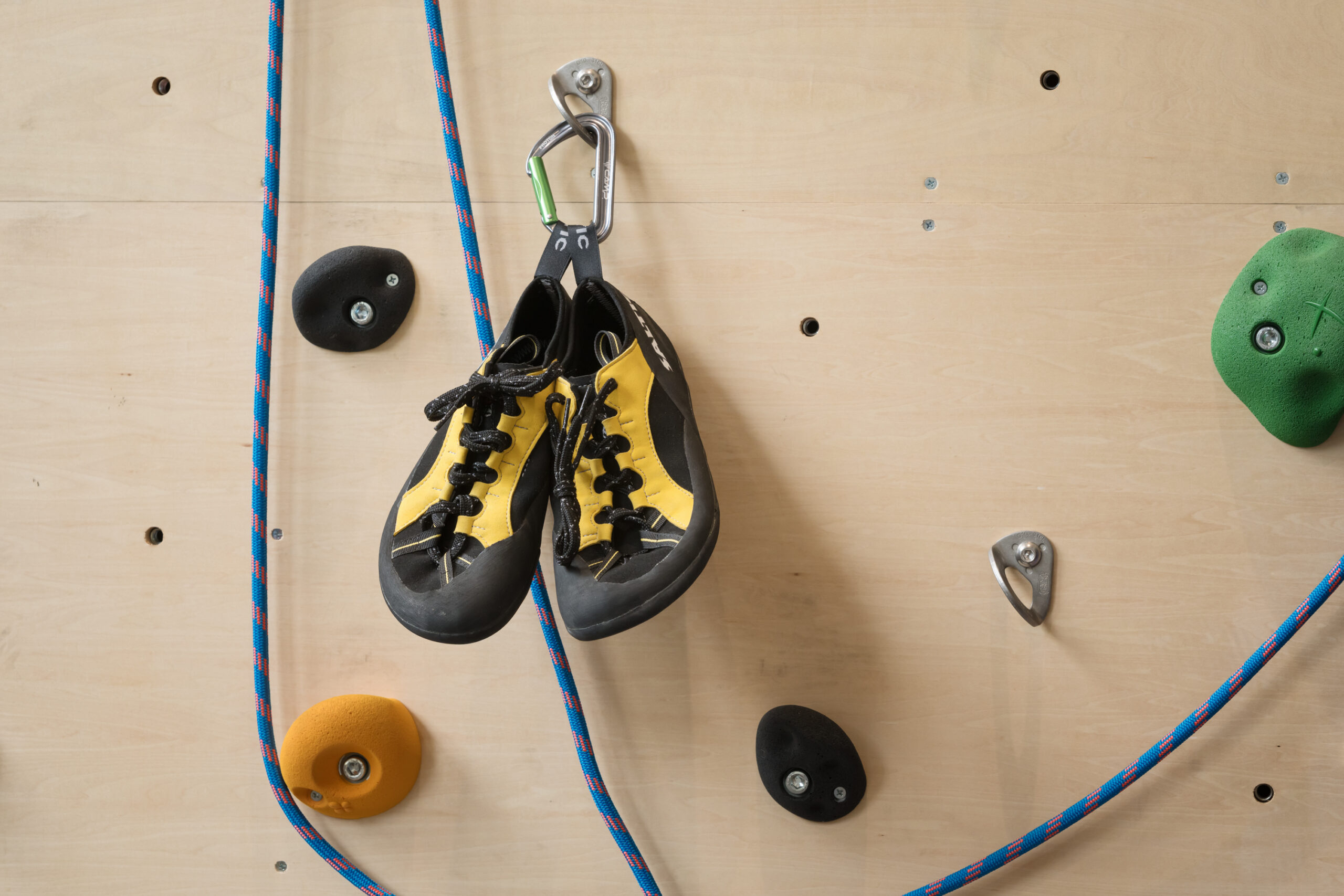
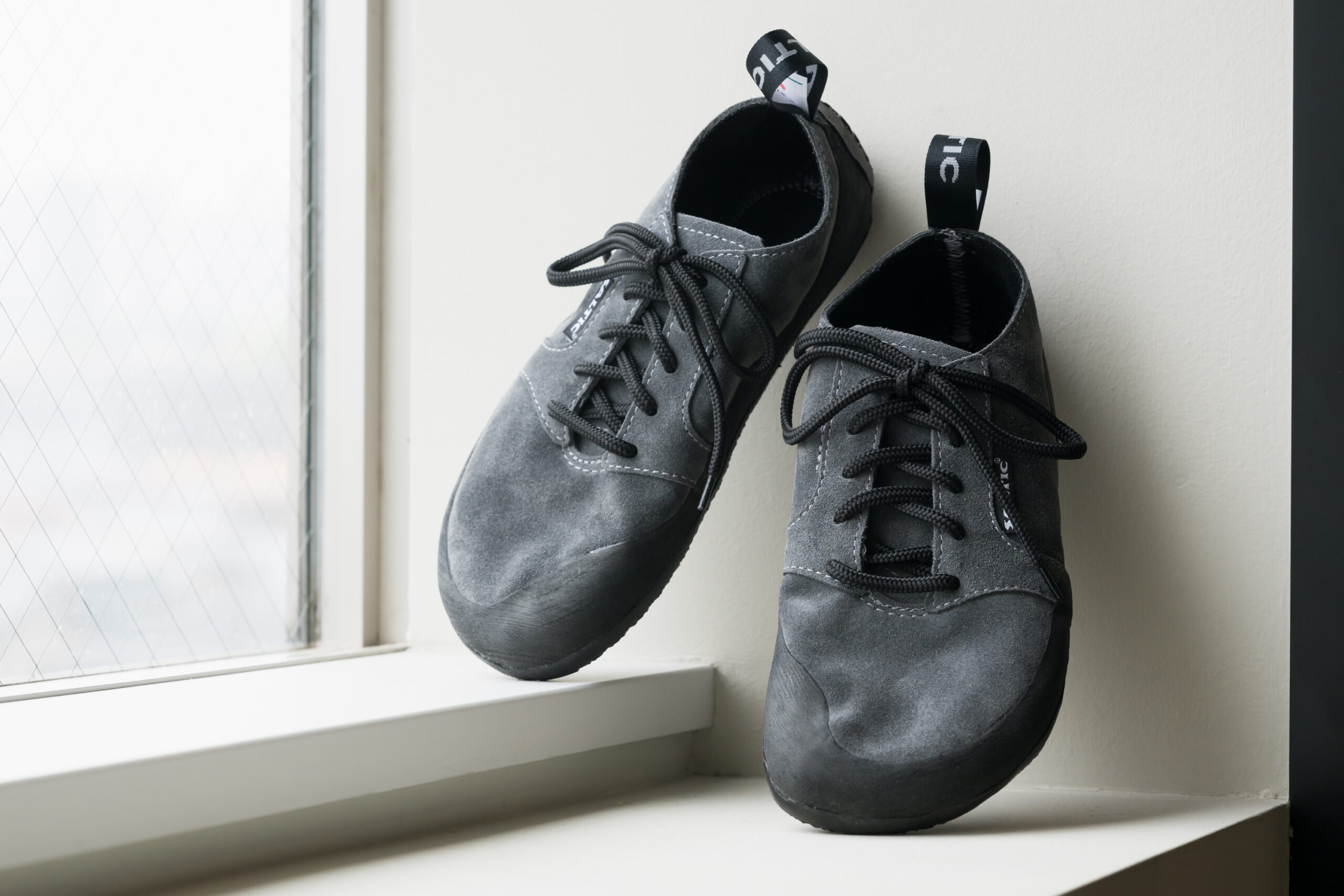
As he speaks, he picks up a pair of flat-soled shoes hanging from the climbing wall. They’re Saltic barefoot climbing shoes that Hoshi discovered and decided to carry. When he recommends things he loves to others, his expression is exactly the same as when he’s hiking in the mountains.

Profile
Itsuki Hoshi
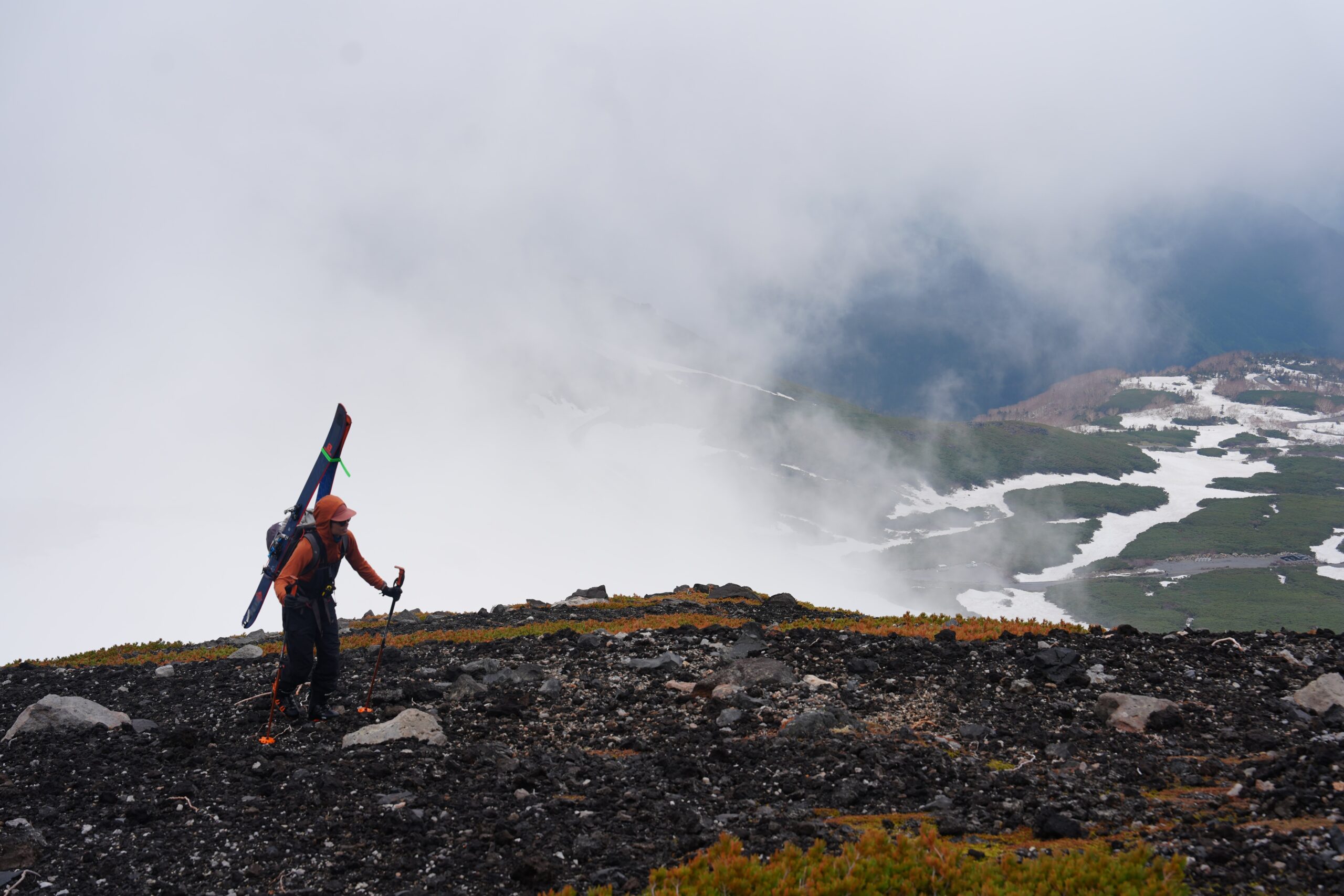
Born in Fukushima Prefecture. He grew up in the nature-rich Aizu region, where he enjoyed playing outdoors from a young age. He started track and field in middle school and aimed to compete in the Hakone Ekiden, but had to give up on that dream when he was unable to transfer to his university’s ekiden team.While continuing with track and field, he also began trail running. The senior who started trail running with him remains a close friend to this day. In the summer, he enjoys trail running, mountain climbing, and cycling. In the winter, he enjoys alpine skiing, telemark skiing, and backcountry cross-country skiing. As he continues his career, his range of hobbies continues to expand.